Make a Referral Make a Referral
Header Text

News

Stay up to date with the latest news affecting older people in Auckland and across Aotearoa.


At Age Concern Auckland, we curate relevant articles, updates, and stories on topics like elder wellbeing, healthcare, housing, community services, and policy changes. Check back regularly for fresh content that matters to seniors, their whānau, and caregivers.

READ MORE
2 Oct

Free breast screening extends to women aged 71 from today

From the beehive: From today, women turning 71 are eligible for free breast screening as BreastScreen Aotearoa's age extension programme enters its second year, Health Minister Simeon Brown and Women's Minister Nicola Grigg say.

"Breast cancer is the most common cancer among New Zealand women, with around 3,700 diagnosed every year. Extending free screening means more of those cancers will be found early, when they're most treatable," Mr Brown says.

"Last October we took the first step in a four-year rollout, extending free screening to women aged 70 and 74. From today, women turning 71 are included, with those turning 72 and 73 to follow each October over the next two years.

"Once the extension is fully in place, approximately 120,000 more women will be eligible for free screening."

Mr Brown says the Government has been building capacity so services can keep pace with demand.

"All four new mobile screening units have now been delivered, bringing the national fleet to 14. Each can screen around 5,000 women a year and brings mammograms to women in provincial centres, small towns, and rural communities, so fewer women need to travel long distances to be screened.

"Alongside the mobile units, five new or redevelopment sites have been established in Whangārei, Takapuna, Greenlane, Kāpiti, and Counties Manukau."


Read more
READ MORE
2 Oct

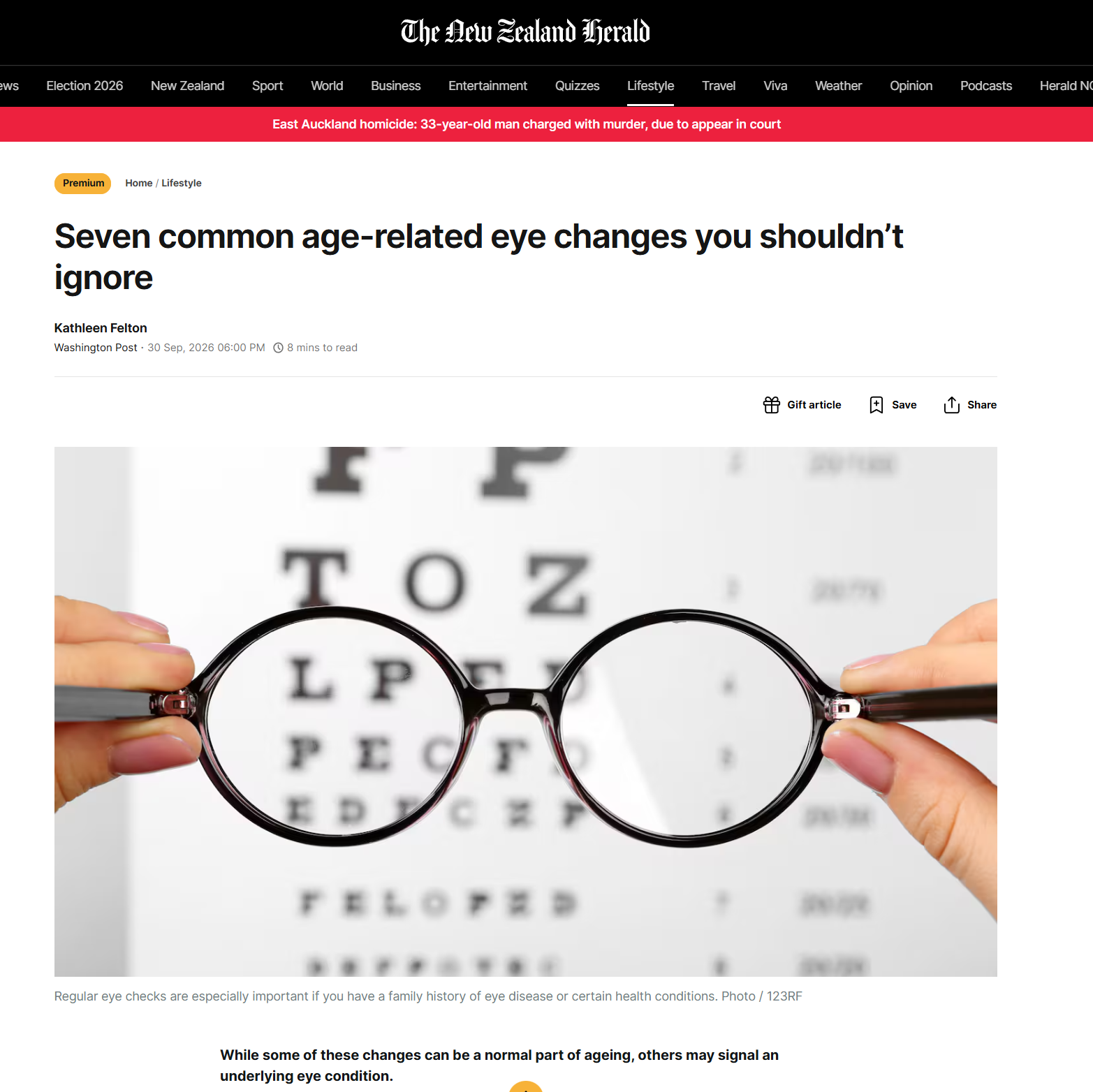
Seven common age-related eye changes you shouldn’t ignore

From the Herald: While some of these changes can be a normal part of ageing, others may signal an underlying eye condition.

James Byczek was out to dinner with his wife and a friend when he noticed what he thought was a fly buzzing around the room. “I asked them if they saw it, too, and they said no,” he said. Later, at home, the floating spot had transformed into a thick, squiggly black line in his left eye. “I thought, ‘that’s weird, I must have something in my eye’,” Byczek, then 56, recalled. But he didn’t see anything when he looked in the mirror.

Byczek, who lives in the US, booked an appointment with an optometrist, who told him to go to the emergency department. Three days later, he was in surgery for a retinal detachment.

Developing a detached retina – when the light-sensitive tissue lining the back of the eye pulls away from its normal position – is fairly uncommon. The average person’s lifetime risk is less than 1%. However, if you are very nearsighted, have had a previous eye injury or have a family history of detachment, your chances of experiencing one are higher. Age increases that risk, too. “One of the main considerations with eye health is that age is a risk factor for nearly every eye disease,” said Teri Geist, president of the American Optometric Association and an optometrist at Midwest Eye Care in Omaha, Nebraska.


Read more
READ MORE
1 Oct

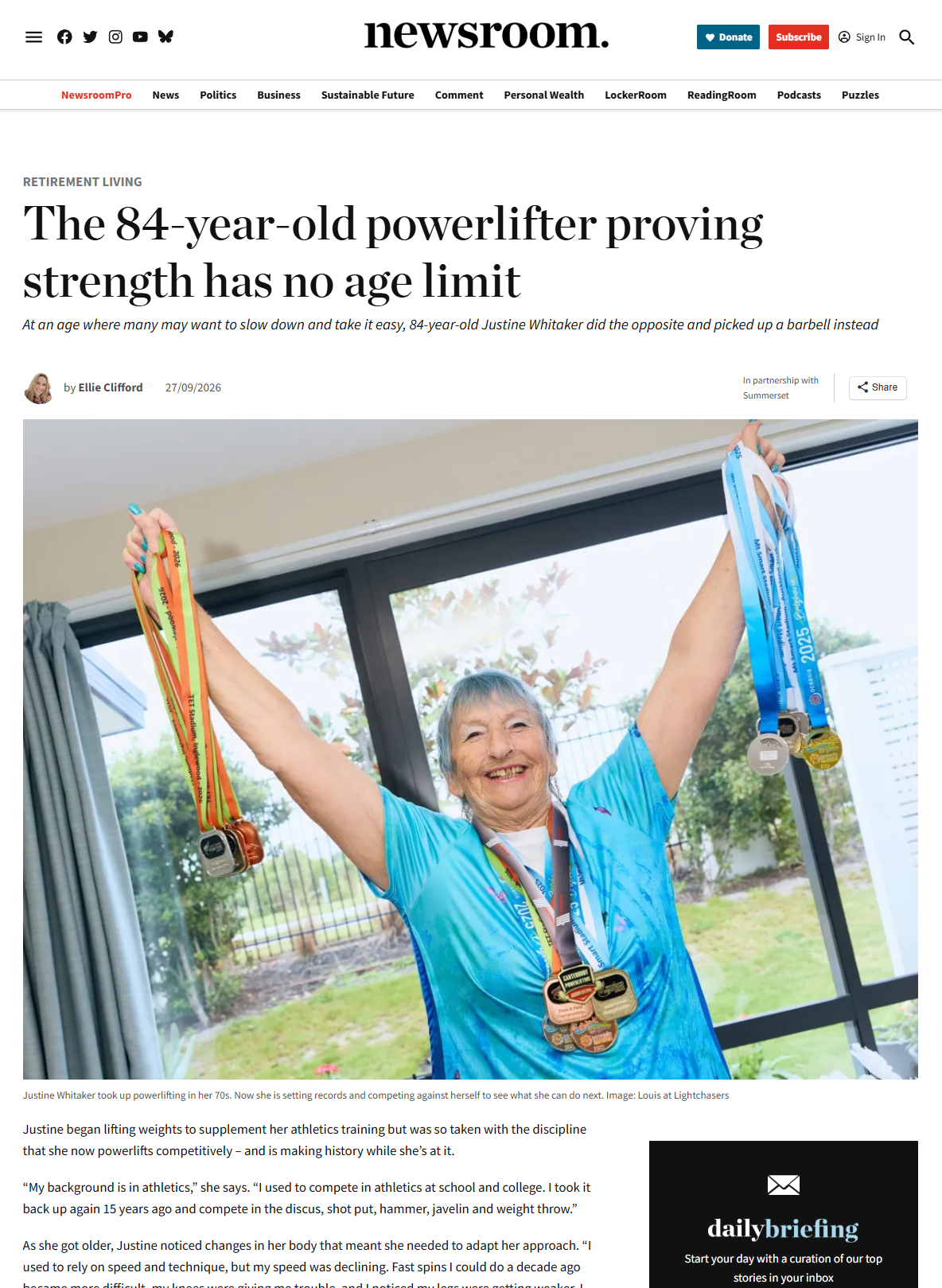
The 84-year-old powerlifter proving strength has no age limit

Justine began lifting weights to supplement her athletics training but was so taken with the discipline that she now powerlifts competitively – and is making history while she’s at it.

“My background is in athletics,” she says. “I used to compete in athletics at school and college. I took it back up again 15 years ago and compete in the discus, shot put, hammer, javelin and weight throw.”

As she got older, Justine noticed changes in her body that meant she needed to adapt her approach. “I used to rely on speed and technique, but my speed was declining. Fast spins I could do a decade ago became more difficult, my knee


Read more
READ MORE
30 Sep

Helping Older People Stay At Home Longer Is Critical Before The Aged Care System Reaches Breaking Point

From Scoop: New Zealand needs to invest more in helping older people remain at home for longer or face mounting pressure on hospitals, residential care and family carers.

To mark International Day of Older Persons (1 October 2026), Presbyterian Support Northern's (PSN) Enliven Home and Disability Support Services is calling on the Government to make ageing at home a national priority. This International Day of Older Persons, Enliven is calling for ageing at home to be a national priority

Enliven General Manager Wendy Hoskin says this year's theme, The Age of Longevity: Rethinking Systems for Longer Lives, highlights the need for the government and communities to rethink how we support an ageing population.


Read more
READ MORE
28 Sep

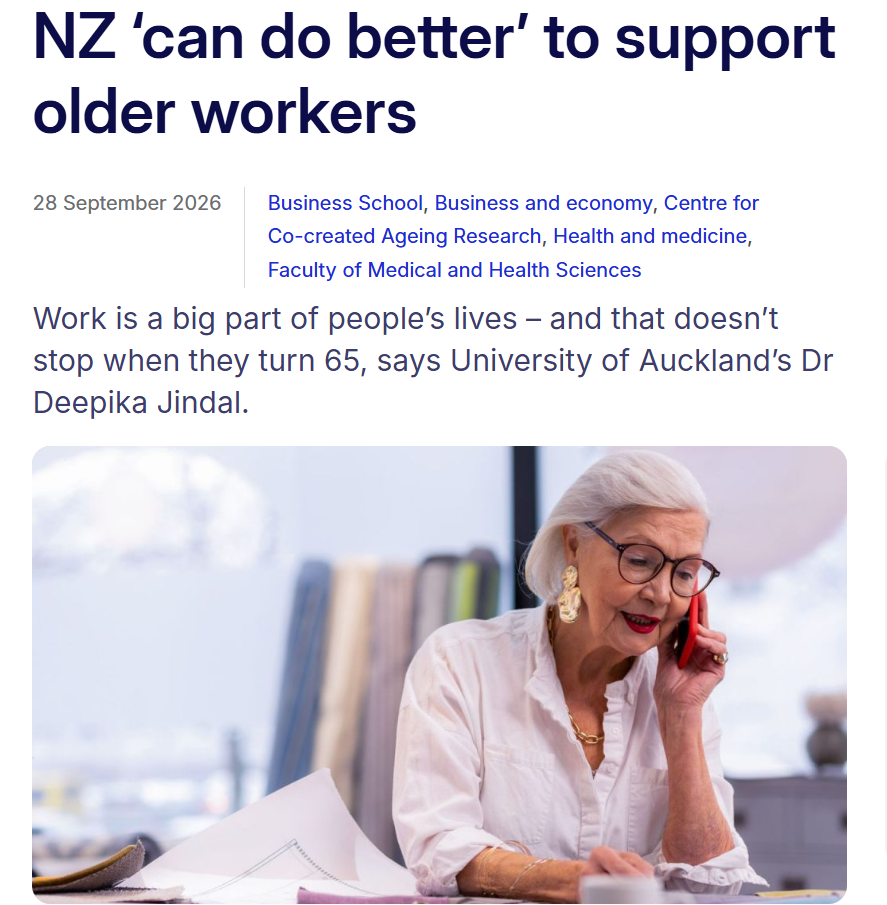
NZ ‘can do better’ to support older workers

From University of Auckland News: Work is a big part of people’s lives – and that doesn’t stop when they turn 65, says University of Auckland’s Dr Deepika Jindal. A new study aims to identify challenges faced by older workers. Photo: GettyImages.Research exploring the employment experiences of older New Zealanders has been launched by University of Auckland's Dr Deepika Jindal.A professional teaching fellow in the Business School, Jindal hopes her study will identify challenges facing older workers and give organisations insights into changes they can make to better support them.In the 1990s, about five percent of people aged 65 and over were in paid employment, but by 2024 this had increased five-fold to about 26 percent, she says.“Some older people are driven by financial necessity, but others find meaning and social connection through work.“Some have said they want to retire, but feel life would be empty without work,” Jindal says.


Read more
READ MORE
24 Sep

Open Letter to MPs


Read more
READ MORE
21 Sep

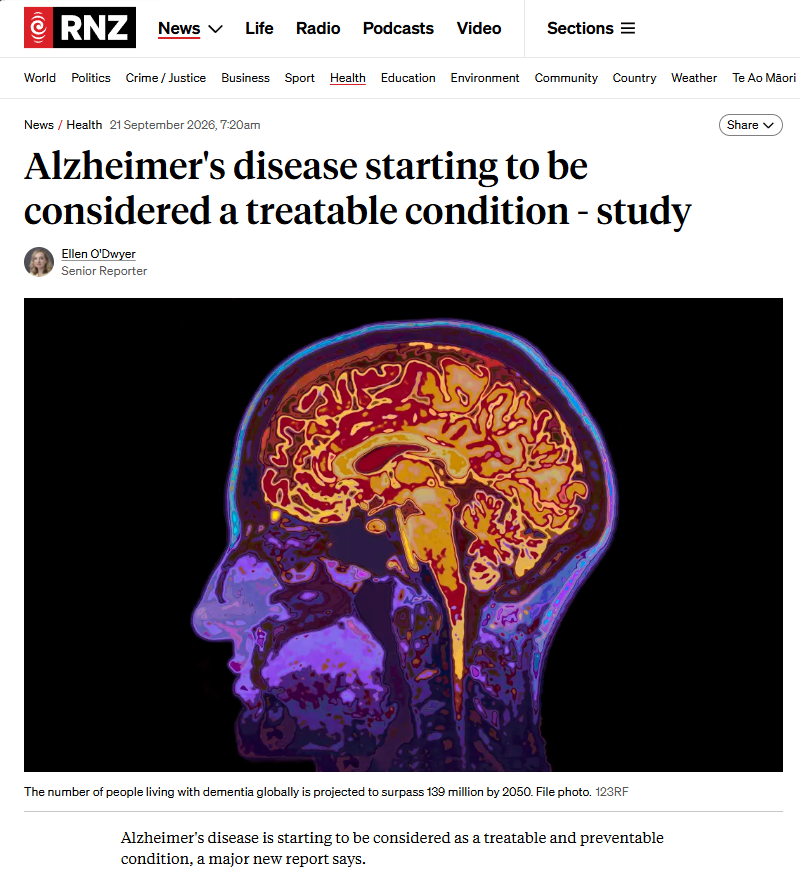
Alzheimer's disease starting to be considered a treatable condition - study

Alzheimer's disease is starting to be considered as a treatable and preventable condition, a major new report says.

The World Alzheimer Report 2026, released today from Alzheimer's Disease International, says despite years of slow progress, clinical trials are now on the brink of diagnostic and medical breakthroughs.

The number of people living with dementia globally is projected to surpass 139 million by 2050, the report said, becoming one of the leading causes of death throughout the world.

But while a cure is still far away, medical research is radically shifting the understanding of the disease.

"I think for a long time there's been a fairly nihilistic view in the dementia world, that it is something that can just happen as you age for example, and that we can't do anything about," neurologist, neuroscientist and Alzheimers NZ spokesperson Dr Campbell Le Heron said.


Read more
READ MORE
15 Sep

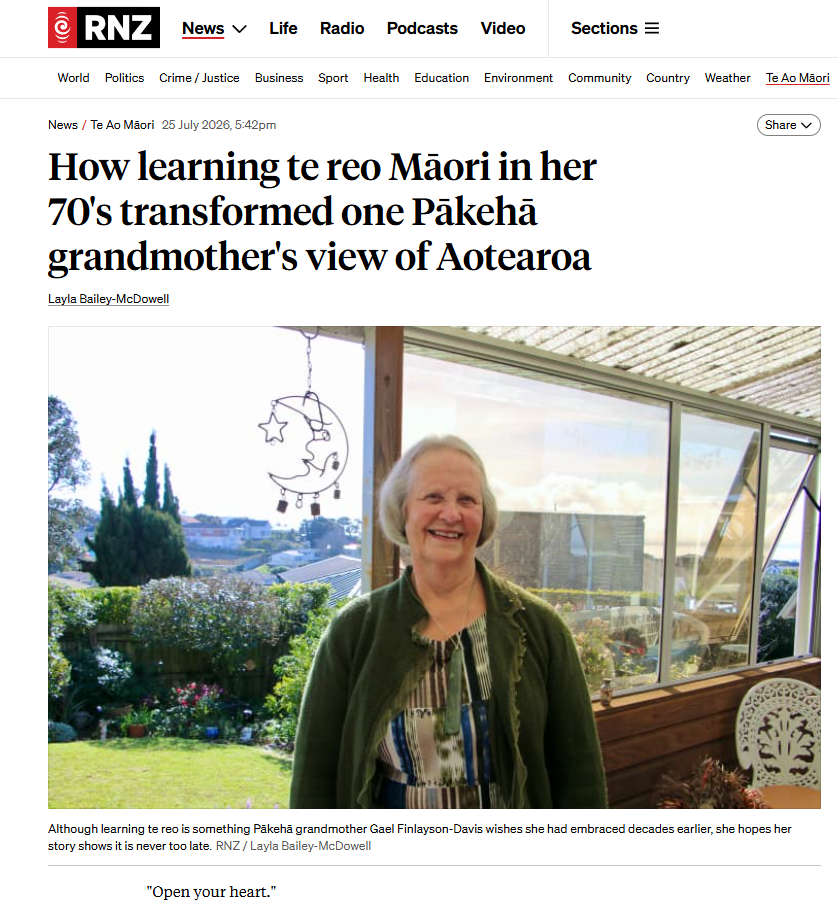
How learning te reo Māori in her 70's transformed one Pākehā grandmother's view of Aotearoa

"Open your heart."

Those are the kupu one Pākehā grandmother hopes will encourage more New Zealanders to take their first step toward te reo Māori and te ao Māori.
Gael Finlayson-Davis, grandmother of six and great-grandmother of two, now in her 70s, became an unexpected symbol of this year's Matariki celebrations after speaking through tears at the national hautapu ceremony at Takaparawhau.


Her emotional kōrero, in which she described learning te reo Māori as part of her hope for "a better future for our country", resonated with thousands.

Although learning te reo is something she wishes she had embraced decades earlier, she hopes her story shows it is never too late.

"If I can do it in my 70s, anyone can," she told RNZ.


Read more

READ MORE
14 Sep

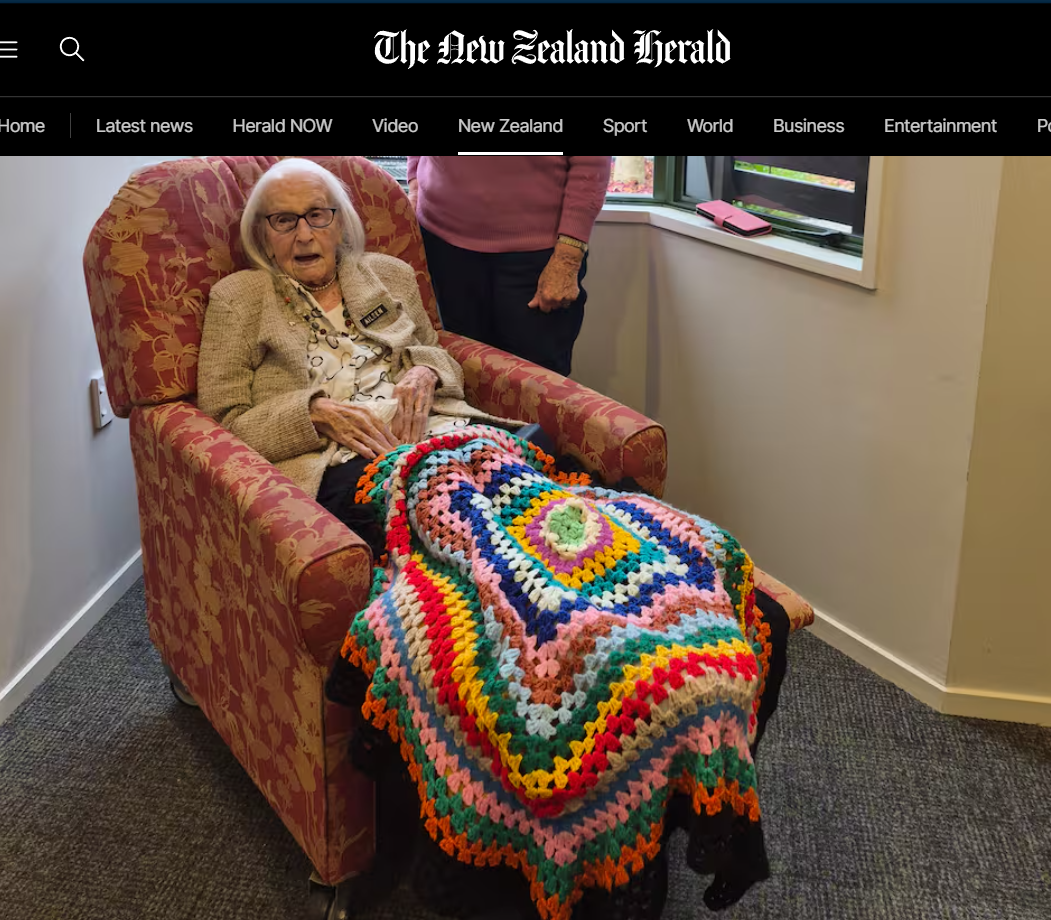
New Zealand’s oldest person, Aileen Kars, turns 113, garden named in her honour

From the Herald: With spring comes new life, fresh blooms and yet another birthday for our oldest Kiwi.

Aileen Emily Kars turns 113 today, and to mark the occasion, a newly refurbished garden at her Palmerston North retirement village will be named in her honour.

Born on September 12, 1913, in nearby Tokomaru, Kars is New Zealand’s oldest living person and the 25th oldest in the world, according to the US Gerontology Research Group.

She is also New Zealand’s only validated living supercentenarian, someone aged 110 or older.

While Kars wasn’t up to giving an interview, her long-time friend Jan Cook said a garden was a fitting tribute to a lifelong nature lover.


Read more
READ MORE
11 Sep

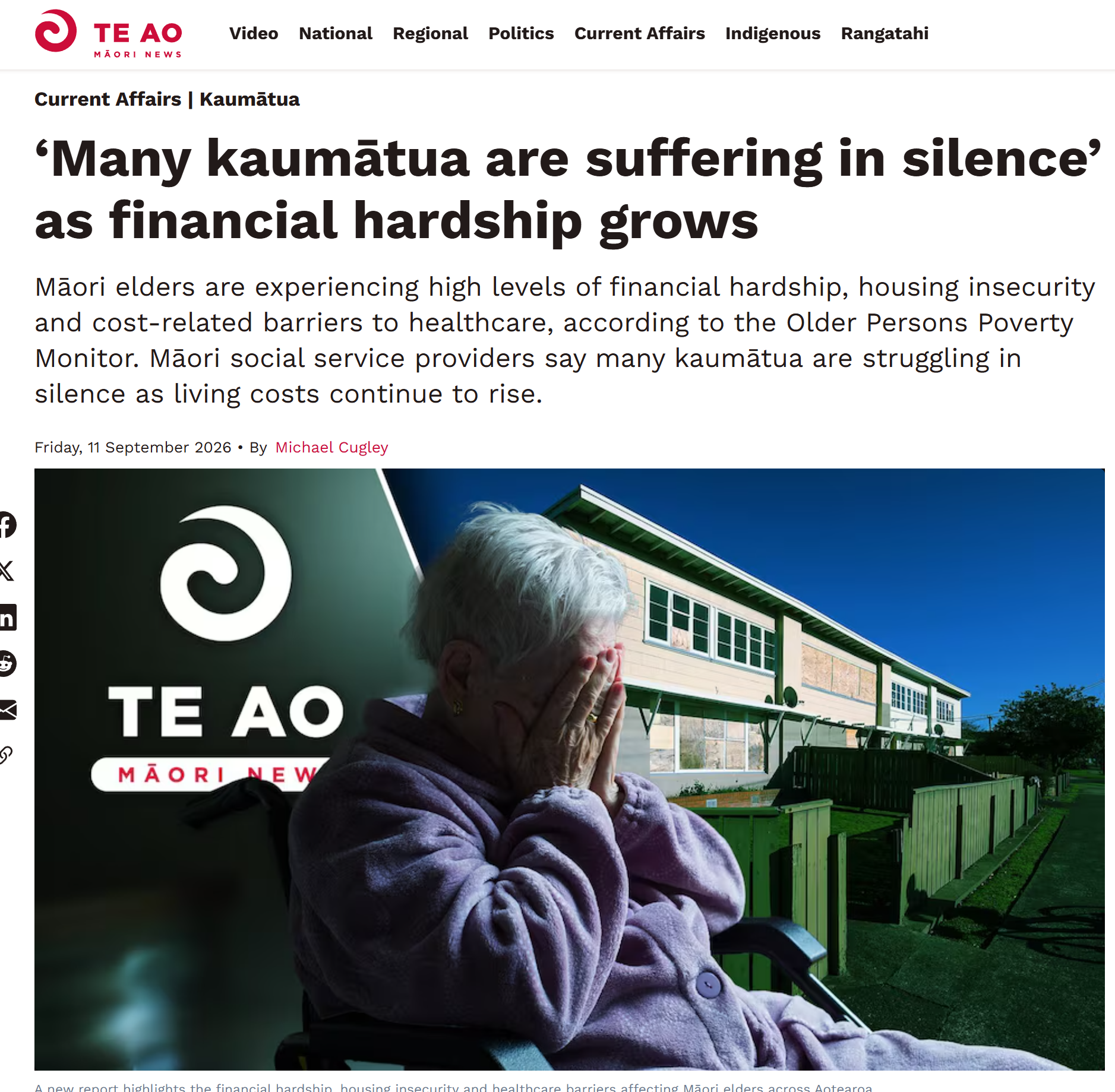
‘Many kaumātua are suffering in silence’ as financial hardship grows

From Te Ao Maori News: Māori elders are experiencing high levels of financial hardship, housing insecurity and cost-related barriers to healthcare, according to the Older Persons Poverty Monitor. Māori social service providers say many kaumātua are struggling in silence as living costs continue to rise.
Māori elders are experiencing disproportionately high levels of financial hardship, housing insecurity and barriers to health care, according to the latest Older Persons Poverty Monitor.

The report found that older Māori were among those most affected across measures of income, housing and health.

It found that 38.6% of older Māori lived in accommodation they did not own, while 38% had delayed visiting a doctor or dentist because of cost. Nine per cent were experiencing material hardship.

Māori social service providers say the findings reflect what they are seeing in communities, with many kaumātua struggling to meet basic living costs and access essential support.


Read more
READ MORE
10 Sep

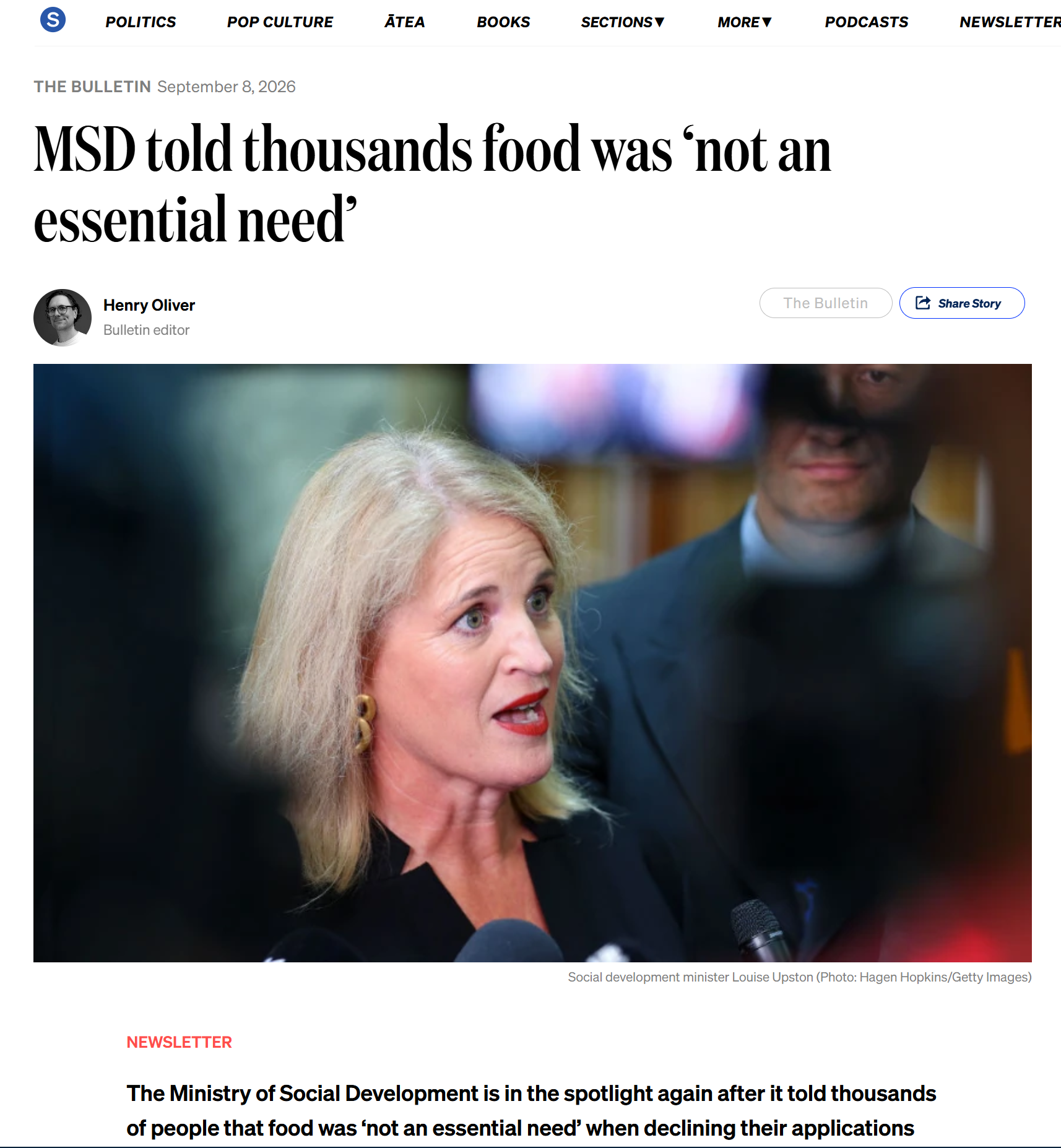
MSD told thousands food was ‘not an essential need’

The Ministry of Social Development has told thousands of people that food was “not an essential need”, in what it now calls an admin error, 1News reported last night. Documents obtained through the Official Information Act show MSD has routinely used that reasoning to decline Special Needs Grant applications for help with food over the last six years.

In total, more than 8,000 applications were declined on that basis. The ministry said that represented just 0.094% of the more than 8.5m applications processed over that period, and blamed the error on staff selecting the wrong category when processing applications. “Where the code was entered, it does not mean the underlying decision was incorrect, but selecting this category was an administrative error,” MSD group general manager of client service delivery Graham Allpress told 1News.


Read more
READ MORE
10 Sep

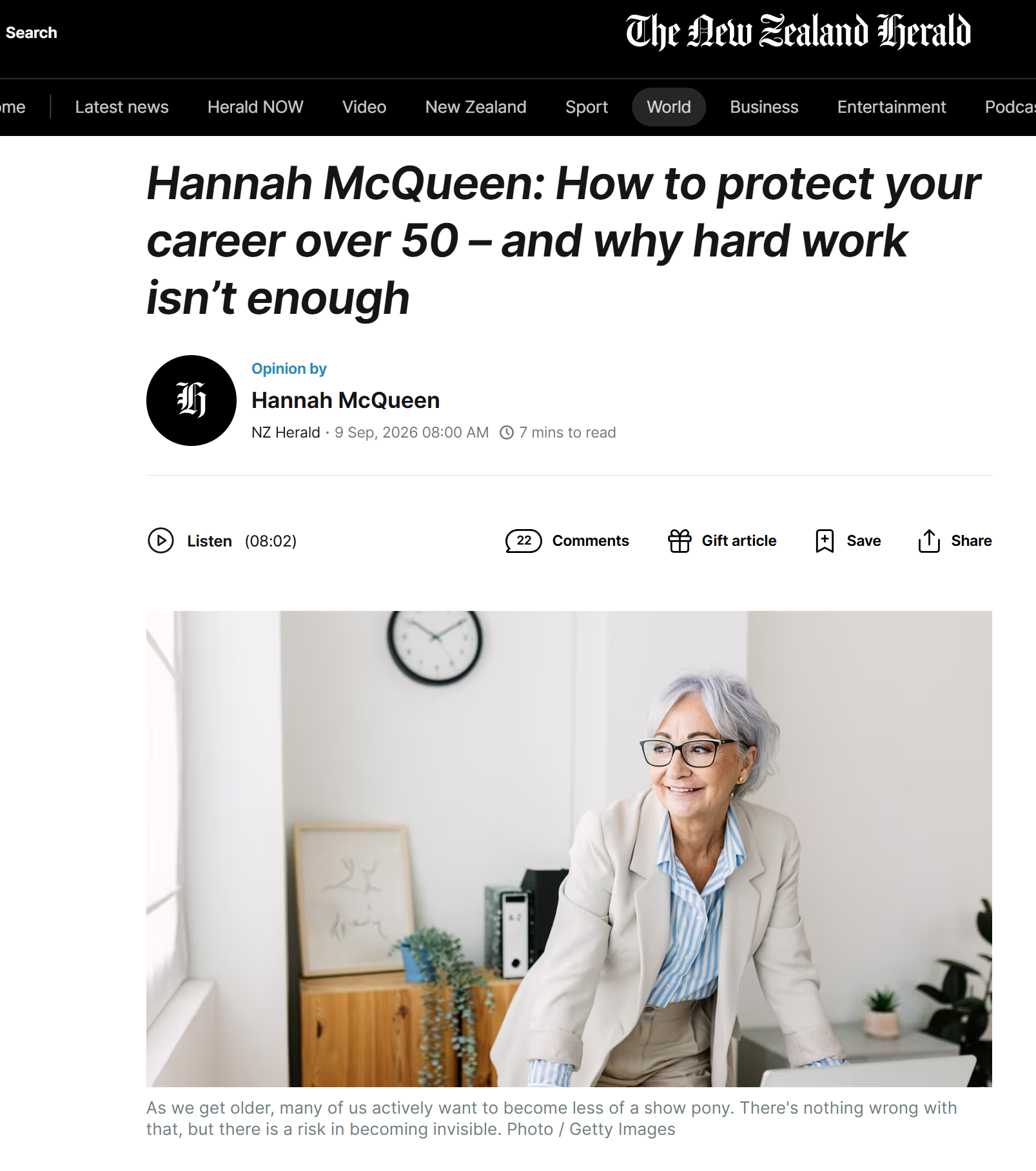
Hannah McQueen: How to protect your career over 50 – and why hard work isn’t enough

From the Herald: On Saturday I caught up with a friend I’ve known for years. She’s in her early 50s, whip-smart, funny and at the absolute top of her game professionally.

But she isn’t happy in her job. She wants to leave and find something else.

The problem is, she’s scared to.

“I don’t think I’d be hireable,” she told me. “I’m almost in my mid-fifties, after all.”

I raised an eyebrow.


Read more
READ MORE
7 Sep

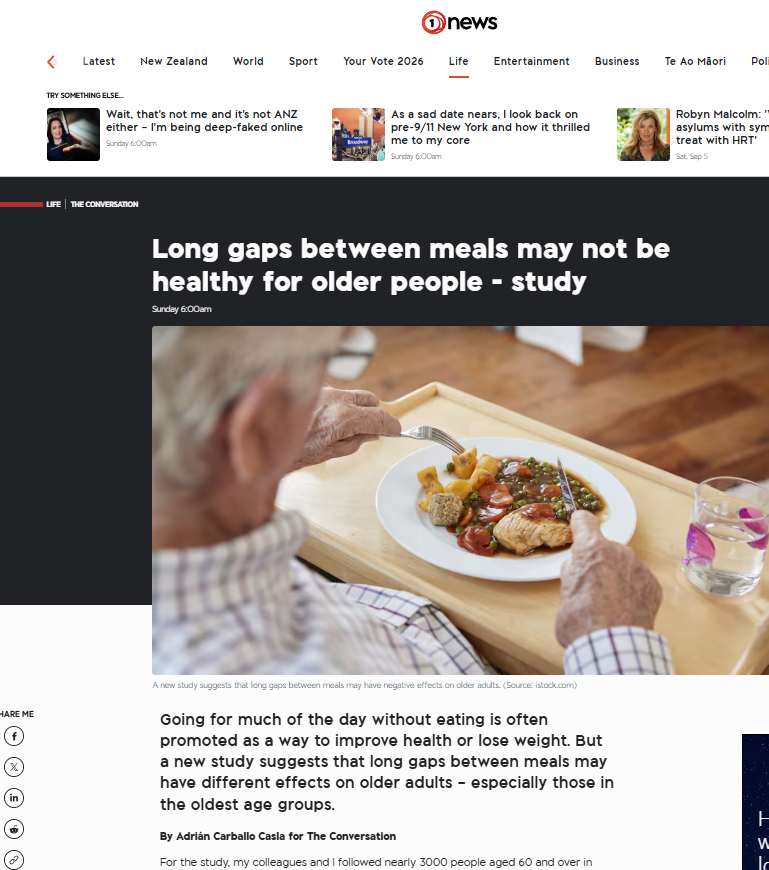
Long gaps between meals may not be healthy for older people - study

From one news: Going for much of the day without eating is often promoted as a way to improve health or lose weight. But a new study suggests that long gaps between meals may have different effects on older adults – especially those in the oldest age groups.

By Adrián Carballo Casla for The Conversation

For the study, my colleagues and I followed nearly 3000 people aged 60 and over in Sweden and found that those who usually went longest without eating developed chronic diseases faster than those who had shorter gaps between meals. The difference was clearest among people aged 78 and over.

This does not mean that fasting causes disease in old age, nor that every older person should avoid long intervals without food. But it does raise questions about whether advice based on stu


Read more
READ MORE
1 Sep

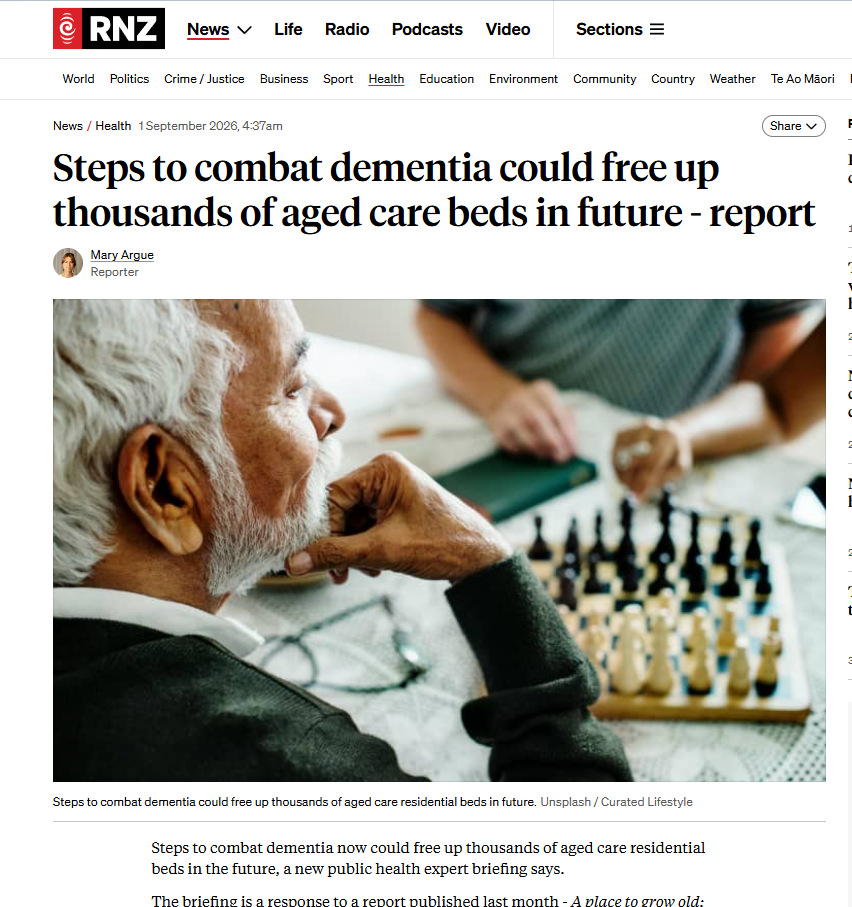
Steps to combat dementia could free up thousands of aged care beds in future - report

Steps to combat dementia now could free up thousands of aged care residential beds in the future, a new public health expert briefing says.

The briefing is a response to a report published last month - A place to grow old: Securing the future of aged care - that laid bare the pressure on the sector as the population ages.

The report called for an overhaul of the aged care system, warning there could be a shortage of more than 9000 residential beds in just over a decade - costing the government nearly $600 million more each year.


Read more
READ MORE
25 Aug

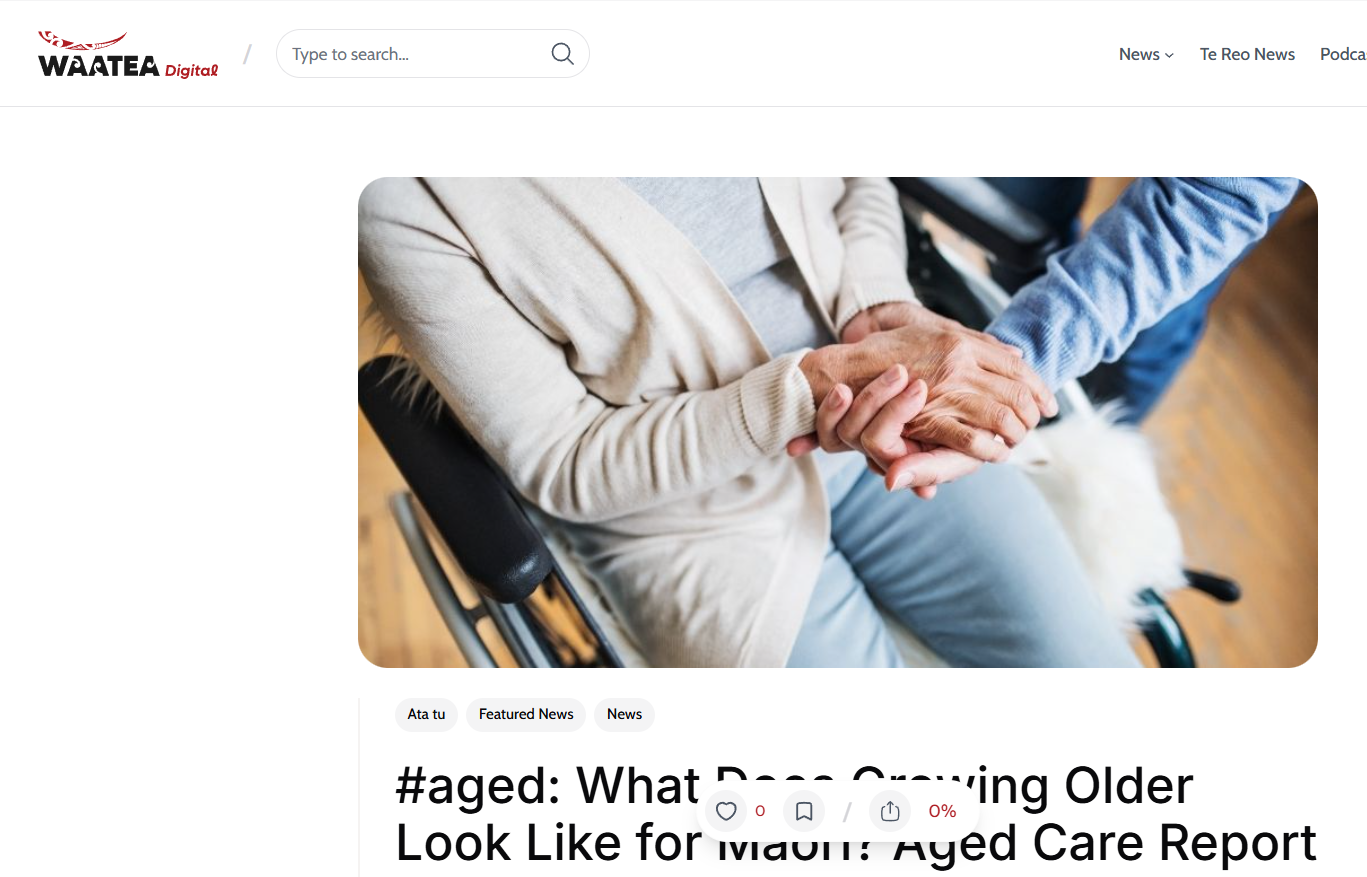
#aged: What Does Growing Older Look Like for Māori? Aged Care Report Exposes Equity Challenge

This from Waatea Digital: A major review of Aotearoa’s aged-care system is calling for sweeping reform, but for Māori health researcher Dr Joanna Hikaka the conversation also raises a more fundamental question: what does growing older actually look like for Māori, and is a system largely designed around Western definitions of ageing capable of meeting the needs of kaumātua?…


A major review of Aotearoa’s aged-care system is calling for sweeping reform, but for Māori health researcher Dr Joanna Hikaka the conversation also raises a more fundamental question: what does growing older actually look like for Māori, and is a system largely designed around Western definitions of ageing capable of meeting the needs of kaumātua?

Dr Hikaka, Director of the Centre for Co-Created Ageing Research, joins Radio Waatea as the Government considers the findings of A Place to Grow Old: Securing the Future of Aged Care, the independent Aged Care Ministerial Advisory Group report released this month.


Read more
READ MORE
25 Aug

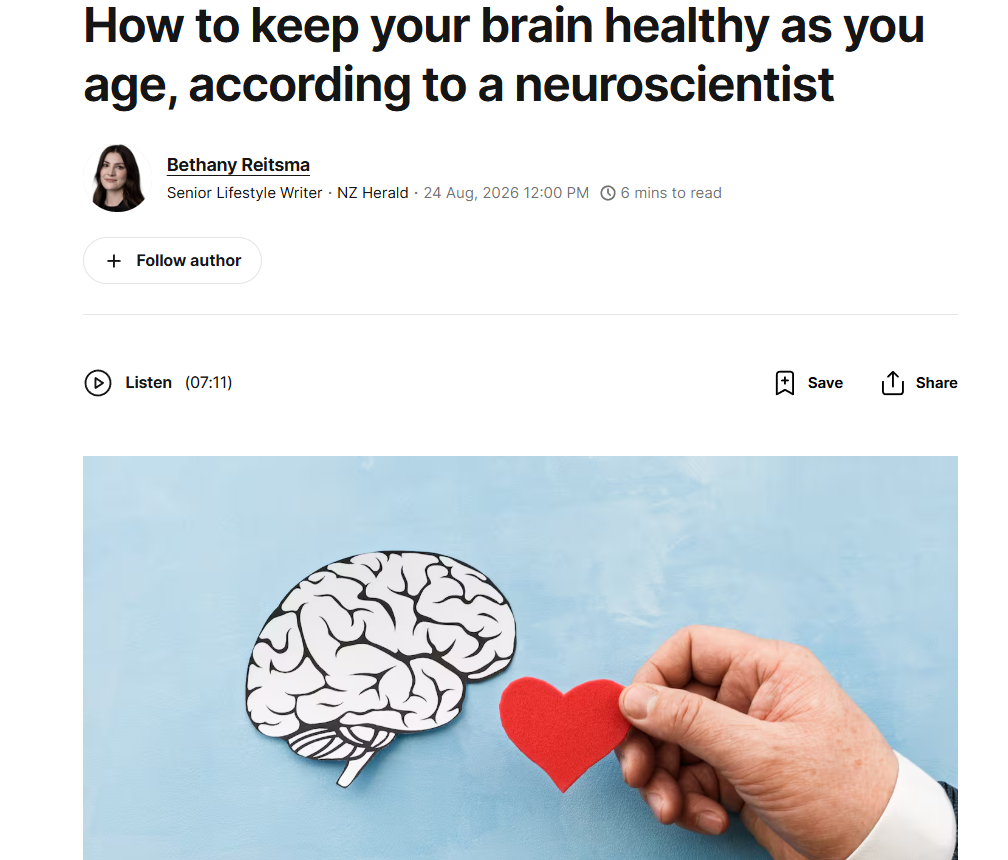
How to keep your brain healthy as you age, according to a neuroscientist

From the Herald: Most of us know what it takes to maintain our physical health, but what does it mean to have a healthy brain?

Professor Hanneke Hulst, a neuroscientist and director of the Centre for Brain Research at the University of Auckland, says brain health depends on multiple factors.

“It is physical health, but it’s also our environment, our opportunities to learn, social connection, safety, access to good healthcare, and I think all of these influence how our brains develop, adapt, respond to challenges throughout life,” she says.

Hulst’s research focuses on cognitive impairment in multiple sclerosis and its effects on those who live with the condition. But she says it’s important to think and talk about brain health not only in the context of disease, but in everyday life.

“We all want to flourish, whether in the presence or absence of a diagnosis,” she says.


Read more
READ MORE
25 Aug

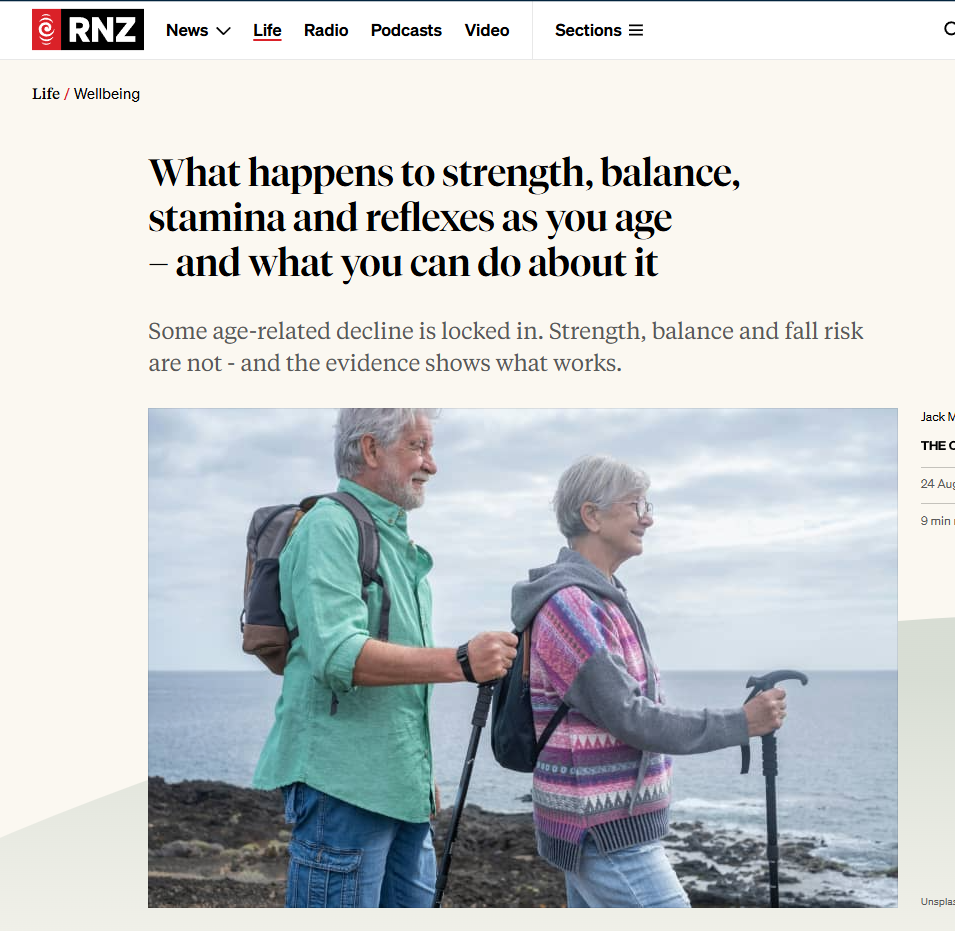
What happens to strength, balance, stamina and reflexes as you age – and what you can do about it

From RNZ: Some age-related decline is locked in. Strength, balance and fall risk are not - and the evidence shows what works.
Jack McNamara and Lee Brown for24 August 20269 min readPhoto credit:Unsplash / Getty Images

Here is a finding that surprises most people, including plenty of regular gym-goers.

When researchers tracked nearly 1900 older adults (aged 70-79) over three years, those who held on to their muscle mass, and even those who gained some, still lost strength. Leg strength declined about three times faster than muscle mass.

That gap matters because it tells you something the mirror does not. Legs can look much the same while the force they produce quietly drains away. It also explains why so much advice about ageing misses the mark. The question is not whether you are losing anything, because you are. The question is which losses you can do something about.


Read more
READ MORE
20 Aug

New report on income poverty in people over 65

Twenty percent of people over the age of 65 have put off going to the doctor or dentist because of the cost, and more than 17 percent do not own their own home, according to a new report.

The Council of Christian Social Services began the Older Persons Poverty Monitor project because there is no formal measure of poverty for older people.

They developed a framework with a plan to provide annual updates and released it's inaugural report this morning.

It found around 102,000 older people are living in income poverty after housing costs, and half of that number pay more than 40 percent of their income towards accommodation costs.

The council's chief executive Alicia Sudden.


Read more
READ MORE
20 Aug

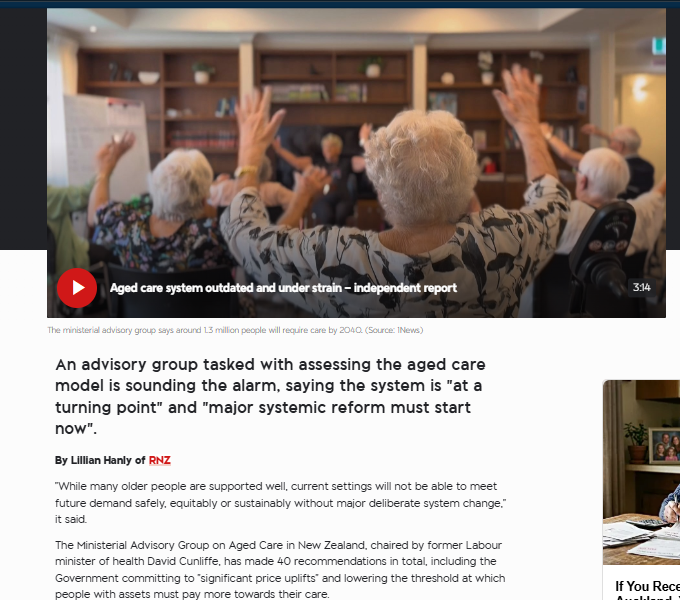
Report calls for action over creaking aged care model

This story from One News: "While many older people are supported well, current settings will not be able to meet future demand safely, equitably or sustainably without major deliberate system change," it said.

The Ministerial Advisory Group on Aged Care in New Zealand, chaired by former Labour minister of health David Cunliffe, has made 40 recommendations in total, including the Government committing to "significant price uplifts" and lowering the threshold at which people with assets must pay more towards their care.

It warned if there was no change, there could be a shortage of more than 9000 residential beds in just over a decade, at an additional cost to governments of nearly $600 million a year.


Read more
READ MORE
20 Aug

What Turning 65 Unlock? MoneyHub Publishes List Of Over-65 Entitlements - And Says Most Retirees Claim Only A Fraction

This from Scoop: MoneyHub has published the first guide of its kind in New Zealand: Over-65 Entitlements - The Definitive List for New Zealanders, a single consolidated list of every entitlement, payment, subsidy and discount available to New Zealanders aged 65 and over - more than 40 at last count, and growing. The guide covers NZ Super and its extras, health subsidies, rates relief, transport, SuperGold discounts, funded care and support, and special situations, with every item tagged so readers can see at a glance whether it is automatic, needs a one-off application, or depends on income, assets, a needs assessment or region.

The guide’s central finding: most New Zealanders claim only a fraction of what they could. The information is scattered across Work and Income, Health New Zealand, local councils, NZTA and dozens of company policies - and almost none of it arrives automatically.


Read more
READ MORE
14 Aug

Flu-related hospitalisations in Auckland double in space of a week

Flu-related hospitalisations in Auckland have doubled in the space of a week, as the country's flu season begins to bite slightly later than usual.

Dr Hannah Cooper, a public health physician in the health intelligence team at PHF Science, said in recent weeks - particularly the past seven days - cases have climbed sharply.

"In the past week [there's been] an increase in flu-related hospitalisations in the Auckland region. They actually doubled in the previous week compared to the week prior."

However, they were still within the normal range for peak season seen in previous years.

For the week ending 9 August, the rate was 3.781 per 100,000 people - up from 1.574 the week before.


Read more
READ MORE
12 Aug

Why older people may be left out of KiwiSaver

Kiwis reaching 65 may not get enough support over what to do with their KiwiSaver money, the Financial Markets Authority says.

Head of financial advice Romil Ghelani said it had conducted a review of access to advice this year and one of the most common "advice gaps" was a need for help, as people started to draw down their savings to live on.

"That's one of the hardest financial transitions that someone can make in their life."

He said, while there were products to help, they were not as common as in other countries.


Read more
READ MORE
6 Aug

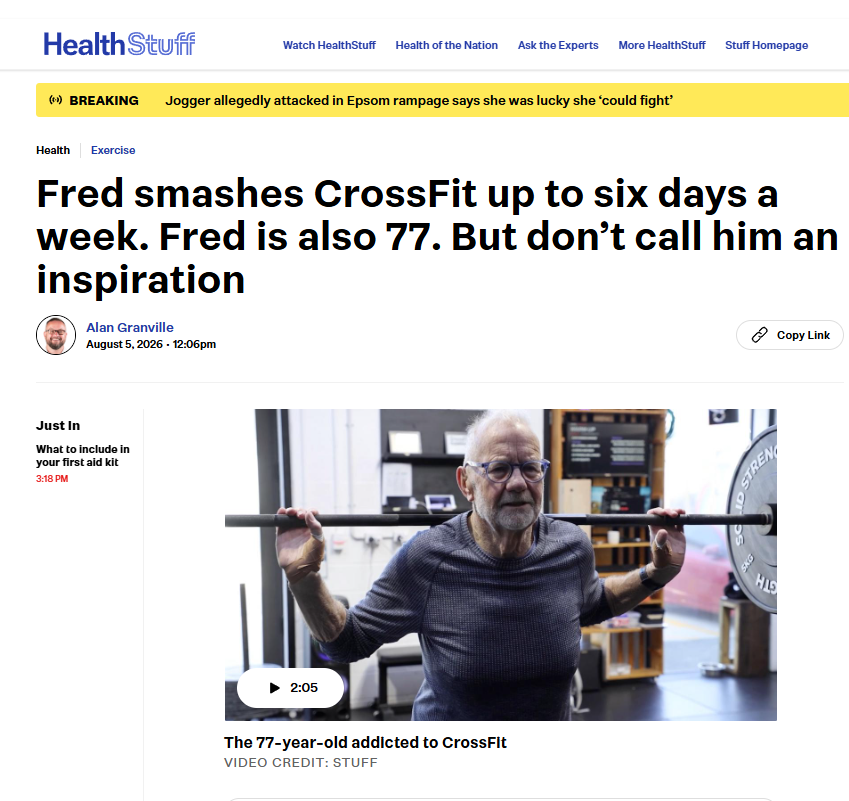
The 77-year-old addicted to CrossFit

Fred Hardy isn’t particularly comfortable with the word “inspiration”, but it’s pretty hard to see him as anything else.

For just over a decade, he’s been hitting the gym regularly, sometimes six days a week.

‘Big deal,’ I hear you say. Plenty of people do that.

But how many of them are 77 years old and taking part in one of the most intense forms of exercise around – CrossFit?


Read more
READ MORE
6 Aug

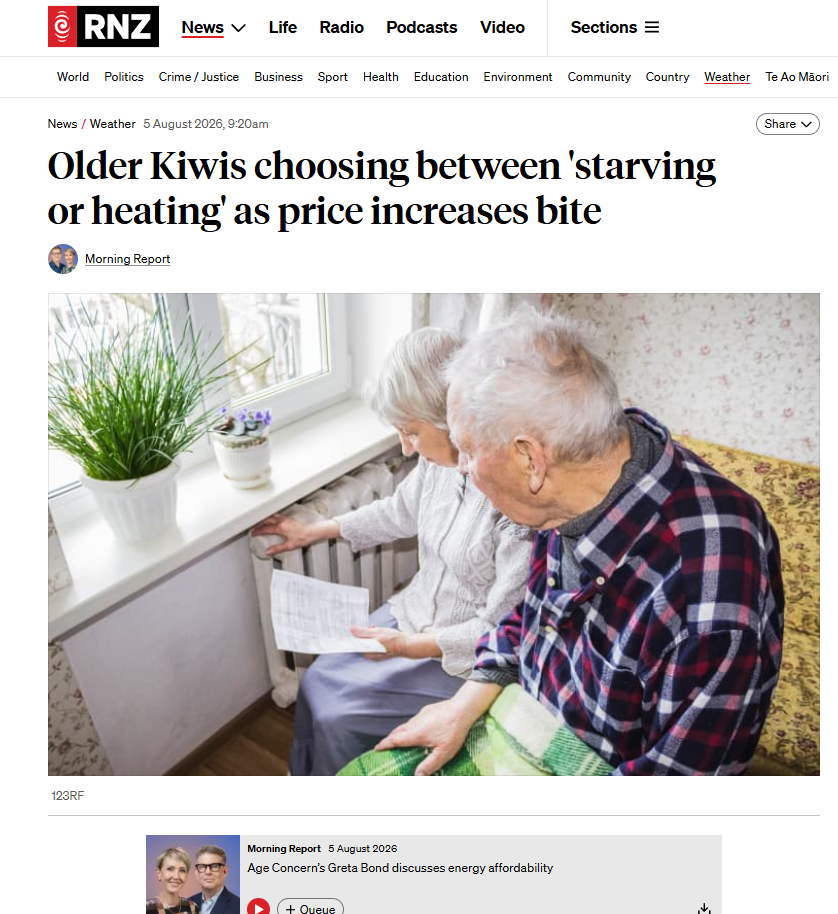
Older Kiwis choosing between 'starving or heating' as price increases bite

From RNZ: An advocate for older people says recent cold temperatures combined with the cost of power and other goods have produced a crisis point, with many people forced to choose between food and heating.

Age Concern Canterbury chief executive Greta Bond told Morning Report older people on fixed incomes were having to make real choices every day about whether they will be warm or fed.

"Every week we're encountering people who are really struggling. Renters are in a particularly precarious position because they may be spending 60 or 70 percent of their pension on rent.

"It's actually a real crisis for people. I don't think people really understand or like to think that we have older people who are actively living in poverty in our country," Bond said.

Many people were resorting to spending most of their day in bed with negative consequences.

"They might get up 


Read more
READ MORE
5 Aug

The Years Ahead: When home becomes too quiet

 From the Herald: Loneliness is common in seniors, and its grip on those feeling it can lead to declining health and elder abuse. Rafaella Melo reports for her The Years Ahead series.

When Mary’s* husband died, the support was everywhere.

Friends checked in, family rallied around. Meals were brought around, phone calls came in, comfort was offered.

But as the weeks turned into months, life slowly returned to normal for everyone elset.


Read more
READ MORE
3 Aug

Don’t Let AI Speak for the Dead

From Psychology today:

Key points

  • AI “grief bots” trained on the dead person’s data promise to let mourners keep the conversation going.
  • Continuing bonds theory holds that carrying the dead within us is healthy—but the carrying is work.
  • Healing from loss and the business model point in opposite directions.
  • Outsourcing remembrance to an app risks the same fate as outsourcing navigation: the capacity fades.


I think of my mother every day. She’s there when I cook the food she used to cook for me, when I smell the flowers she loved, and when I face a tough decision at work. Her voice arrives unbidden, in moments of both strain and joy, and sometimes it feels like we talk more than we did when she was alive.

Psychologists have a name for this. They call it continuing bonds theory—the idea that a healthy relationship with someone we’ve lost doesn’t end at death. We continue to carry the dead with us after their passing: in memory, in ritual, in the inner dialogue that never quite stops. According to continuing bonds theory, this is a healthy and even necessary part of the grief process.


Read more
READ MORE
31 Jul

Why pensioner households experienced the fastest inflation

From RNZ


"Groceries, power and petrol, which I guess are all the obvious ones."

He said he had other income streams as well as receiving NZ Super, which meant his household was more able to absorb the increases, but he could see why many could not. "I was really aware when doing supermarket shopping recently how much things had risen in cost."

He said, if his circumstances were different, he probably would have been looking to return to the workforce – if he could find a job.

Data from Stats NZ this week showed he isn't the only one feeling the pressure. Superannuitant households had the highest annual inflation rate of any household type, up 4.5% over a year, compared to 3.7% for beneficiaries and 3.2% for all households.

Westpac chief economist Kelly Eckhold said electricity, up 12%, and rates up 8.8%, were big drivers of the increase for pensioner households. Petrol was also a factor.


Read more
READ MORE
30 Jul

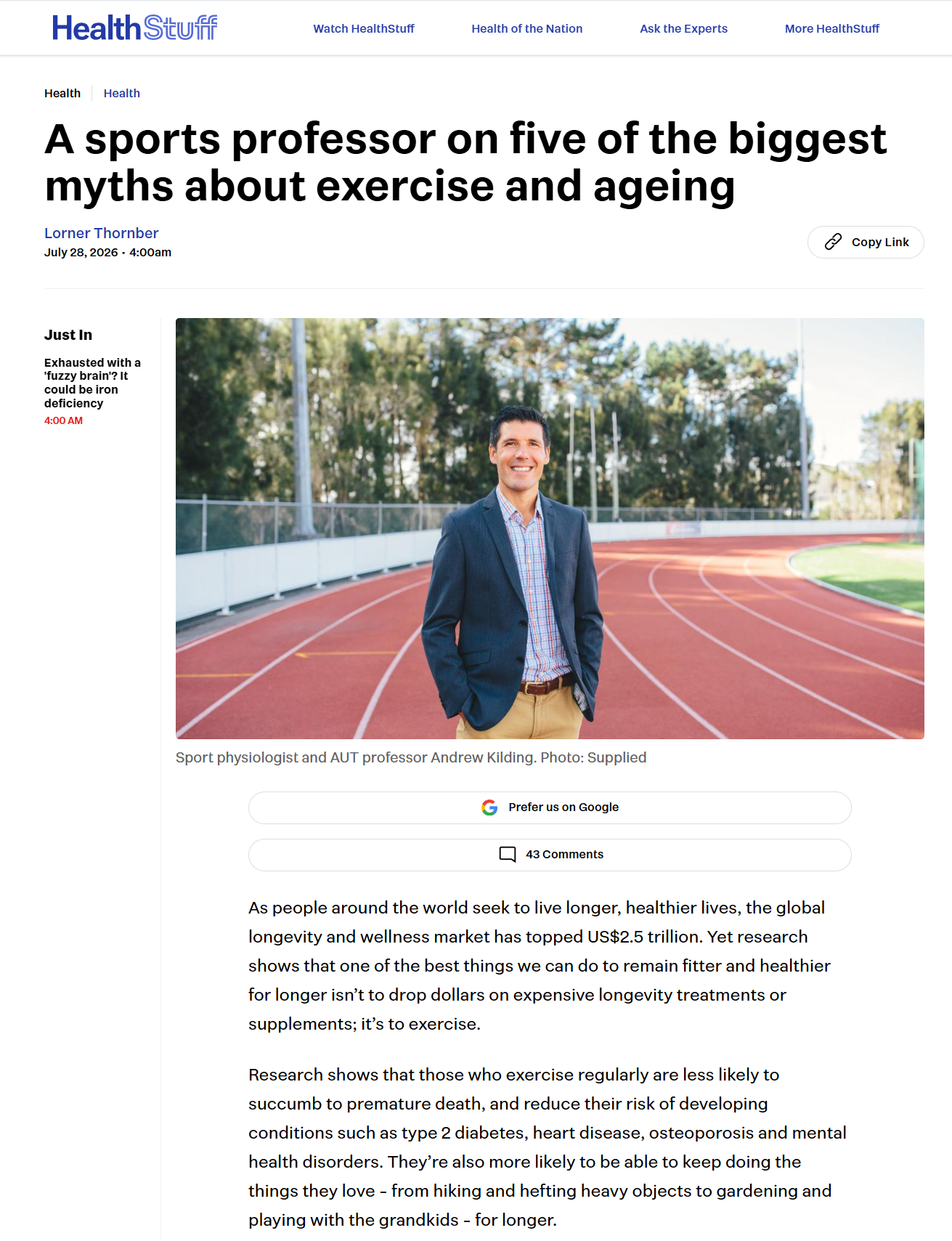
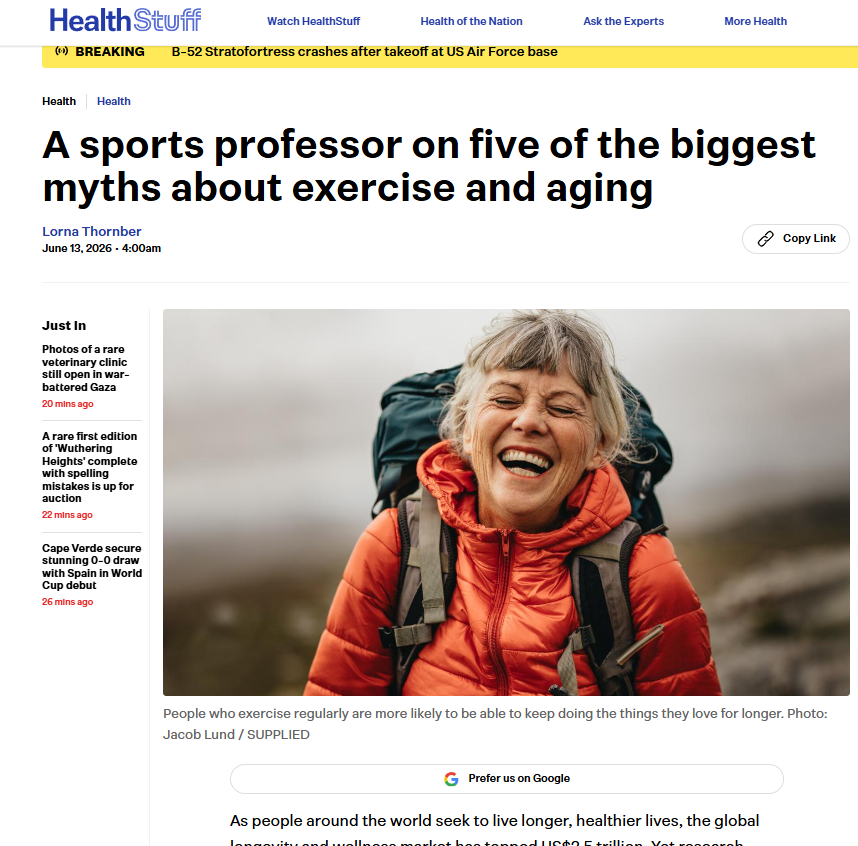
A sports professor on five of the biggest myths about exercise and ageing

As people around the world seek to live longer, healthier lives, the global longevity and wellness market has topped US$2.5 trillion. Yet research shows that one of the best things we can do to remain fitter and healthier for longer isn’t to drop dollars on expensive longevity treatments or supplements; it’s to exercise.

Research shows that those who exercise regularly are less likely to succumb to premature death, and reduce their risk of developing conditions such as type 2 diabetes, heart disease, osteoporosis and mental health disorders. They’re also more likely to be able to keep doing the things they love - from hiking and hefting heavy objects to gardening and playing with the grandkids - for longer.

Sport physiologist and AUT professor Andrew Kilding helps debunk some of the most common myths surrounding exercise and ageing.


Read more
READ MORE
28 Jul

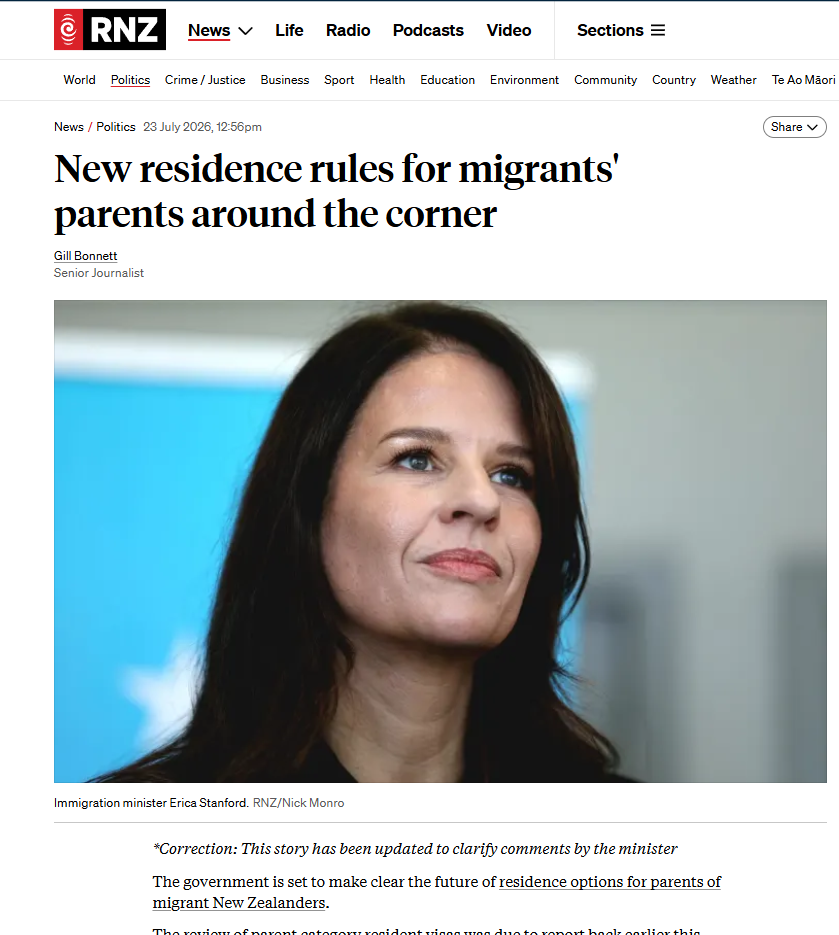
New residence rules for migrants' parents around the corner

From RNZ: *Correction: This story has been updated to clarify comments by the minister

The government is set to make clear the future of residence options for parents of migrant New Zealanders.

The review of parent category resident visas was due to report back earlier this year.

A spokesperson for immigration minister Erica Stanford said an announcement was expected by the end of next month.

Any changes are expected to centre around the ballot system which picks who can apply for the visas, which are capped at 2500 a year.

Latest INZ figures showed 12,000 people had submitted an expression of interest in the previous two years and about half of them were couples.

Critics say the 'lucky draw' process is unfair for those who have waited many years to bring their parents to New Zealand, and want applications dealt with chronologically.

Some also want changes to income requirements for family sponsors, who are New Zealand citizens or residents, which is currently set to support one parent ($109,200 a year) and at least $145,600 a year for two.

It reopened in 2022 under new rules and the visa now costs $5810.


Read more
READ MORE
28 Jul

Social Connection Reduces Dementia Risk – And Thousands Of New Zealanders Are Already Doing Something About It

From Scoop: Probus responds to WHO dementia prevention report, calling on older New Zealanders to act now

As the World Health Organization releases new guidelines identifying social isolation as one of the leading modifiable risk factors for dementia, one of New Zealand’s largest social network for retirees and semi-retirees is calling the findings a wake-up call – and a clear call to action.

Probus in New Zealand, which brings thousands of members together across the country, says the WHO report reinforces what it has known for 50 years: staying socially connected isn’t a nice-to-have in retirement. It’s a health imperative.


Read more
READ MORE
23 Jul

Older people facing impossible choices as cost of living continues to bite

Age Concern Auckland says older people are facing impossible choices as the surging cost of living crisis continues to bite.

Annual inflation had risen to 4.1 percent, the highest level in more than two years.

Power prices were up 12 percent annually and rates increased by 8.8 percent.

Age Concern Auckland's chief executive Kevin Lamb said a lot of older people were existing on superannuation alone.

"These latest increases, and particularly at this time of year, when they're having to make those awful decisions of whether or not to heat their home or go and buy groceries, they are now living almost beyond their means where they simply can't make ends meet," he said.

Lamb said that, in the past year, Age Concern Auckland had seen a 20 to 30 percent increase in calls for help.

"We're dealing with potentially vulnerable older people who don't have support networks around them, they don't have a family to support them, they're living in loneliness and isolation," he said.


Read more
READ MORE
13 Jul

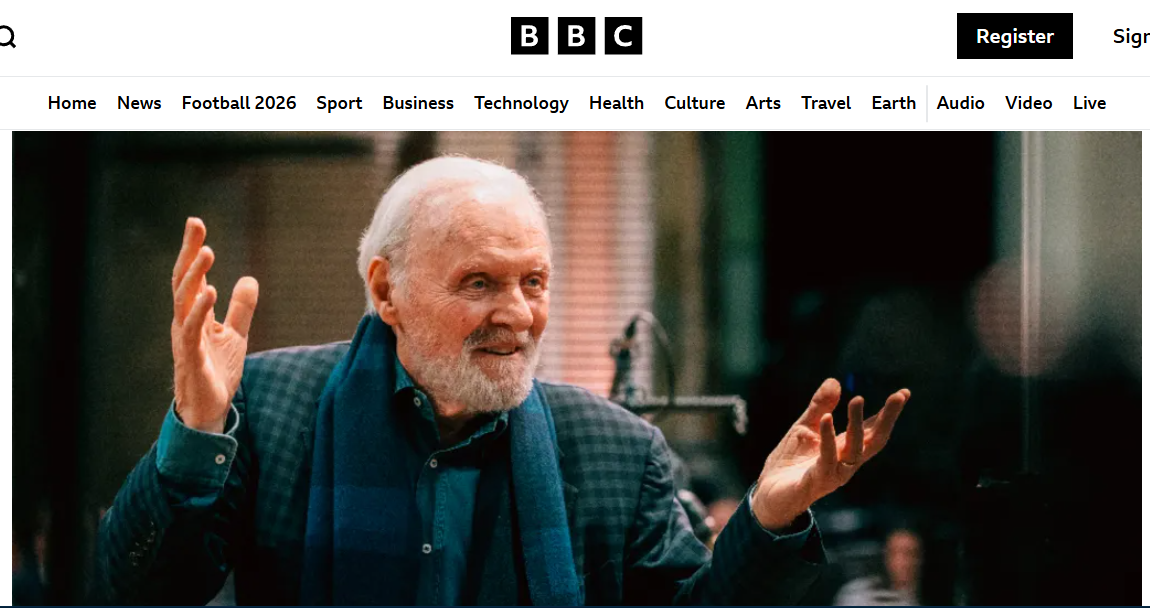
Sir Anthony Hopkins to release debut album inspired by his childhood

This from BBC: Sir Anthony Hopkins will release his first album next month featuring a collection of classical pieces he has worked on for six decades.

The Oscar-winning actor said he had been composing music "all my life", and that "music was my first desire, my first wish".

The first single from the 88-year-old's album, titled Life Is A Dream, was released on Friday, and was inspired by his childhood memories of Margam in south Wales.

The Port Talbot-born star, who won the Academy Award for Best Actor for his role as Hannibal Lecter in The Silence of the Lambs, has written his own music since childhood, and began playing the piano at the age of four.


Read more
READ MORE
9 Jul

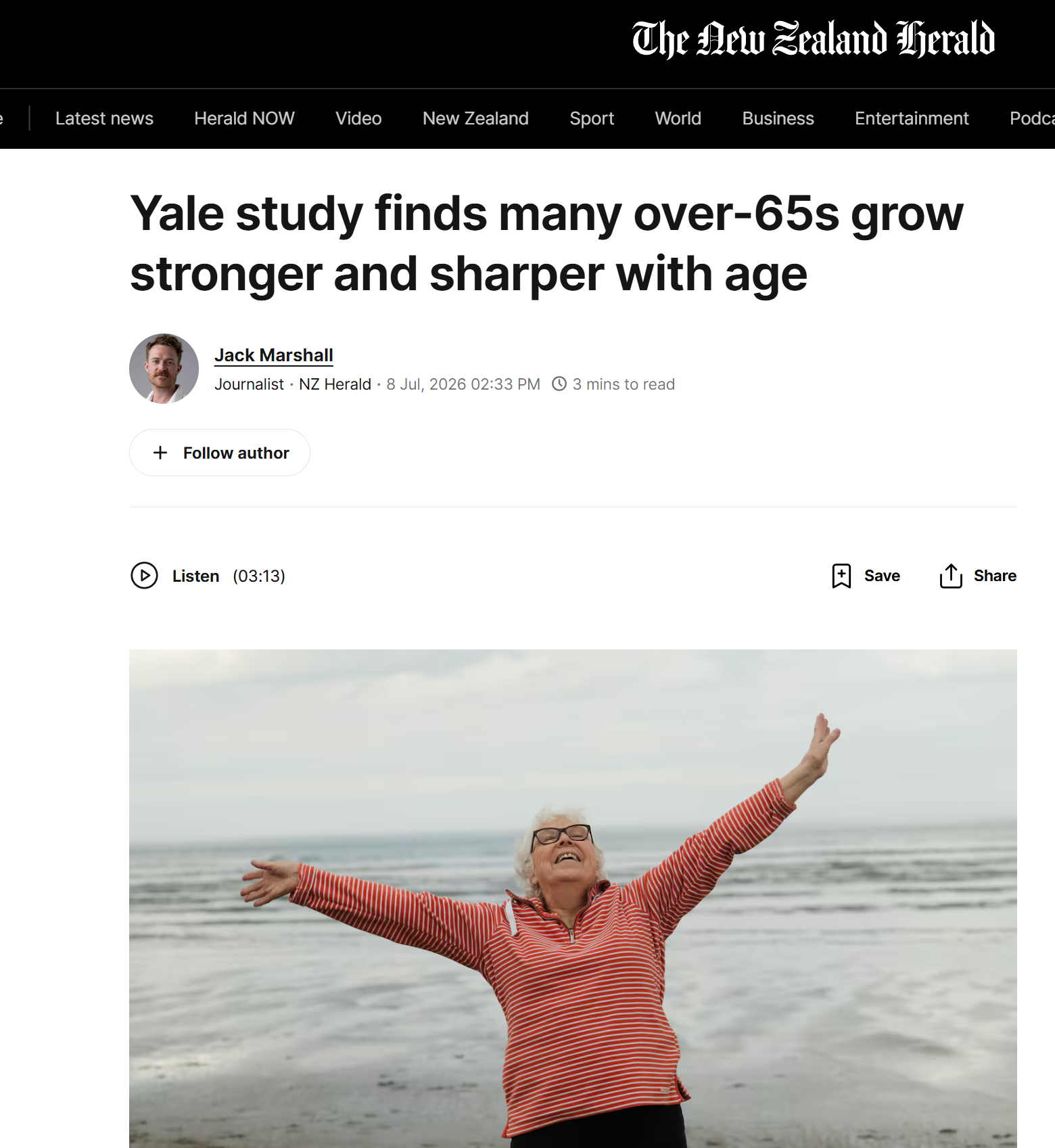
Yale study finds many over-65s grow stronger and sharper with age

Instead of going downhill with age, what if you could actually improve your cognitive function and physical capabilities?

Astronomer Galileo Galilei, often called the “father of modern science”, completed his final masterpiece on the laws of motion while nearly blind, under house arrest and over 70.

Swimmer Diana Nyad swam 177km from Cuba to Florida when she was 64, after failing multiple times earlier in life.

Painter Joseph Turner produced some of his most ground-breaking and enduring works in his 60s.

If beauty is in the eye of the beholder, then new research shows healthy ageing could be in the mind.


Read more
READ MORE
3 Jul

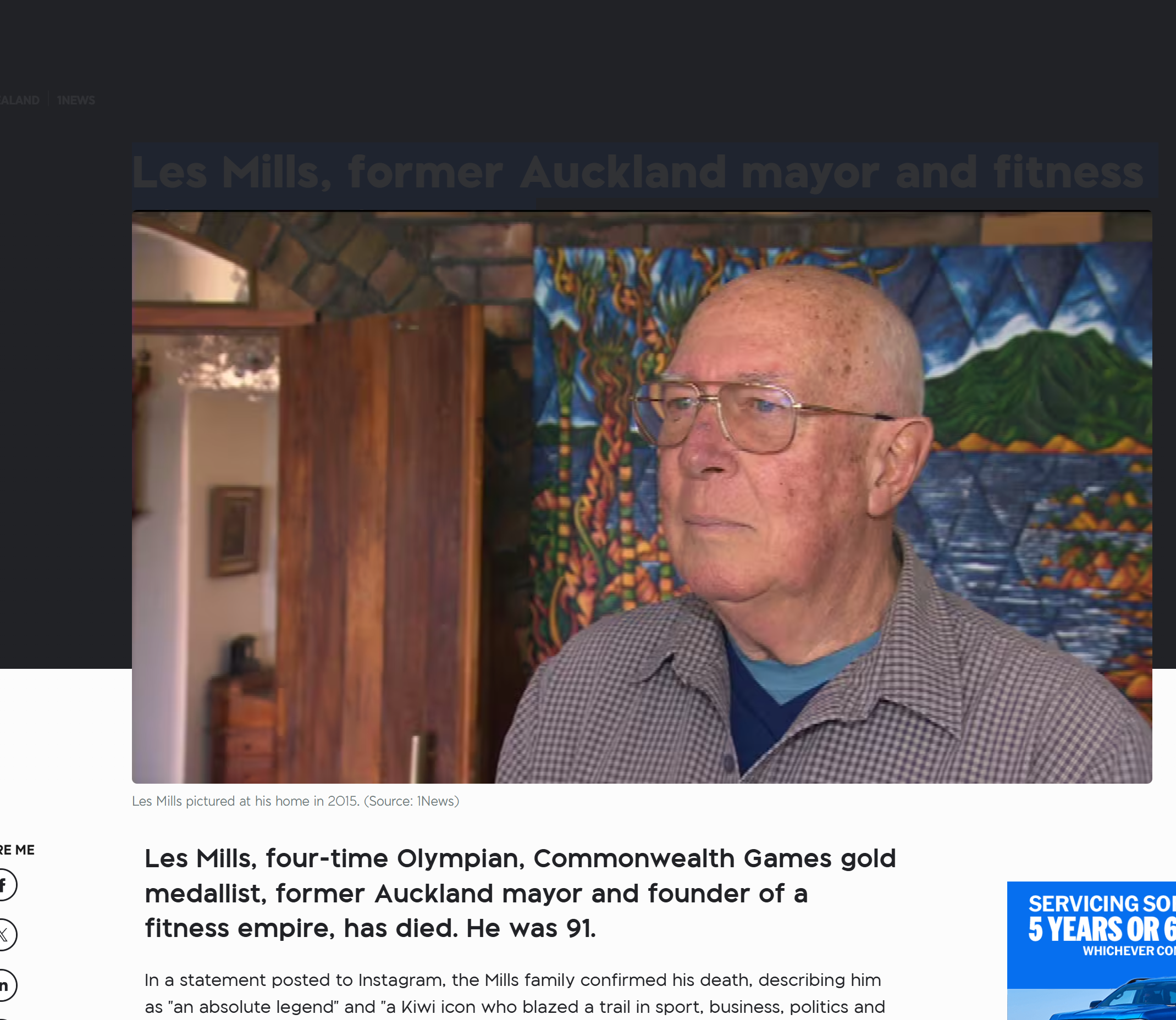
Les Mills, former Auckland mayor and fitness pioneer, dies at 91

From one news: Les Mills, four-time Olympian, Commonwealth Games gold medallist, former Auckland mayor and founder of a fitness empire, has died. He was 91.

In a statement posted to Instagram, the Mills family confirmed his death, describing him as "an absolute legend" and "a Kiwi icon who blazed a trail in sport, business, politics and life".

"He laid the foundations for a movement that has inspired millions around the world to fall in love with fitness – a legacy that lives on in every workout."

Leslie Roy Mills MBE, CNZM was born in Auckland on November 1, 1934. The death of his father led him to find solace in fitness and he grew into an athlete that would represent New Zealand on the world stage for more than a decade.


Read more
READ MORE
3 Jul

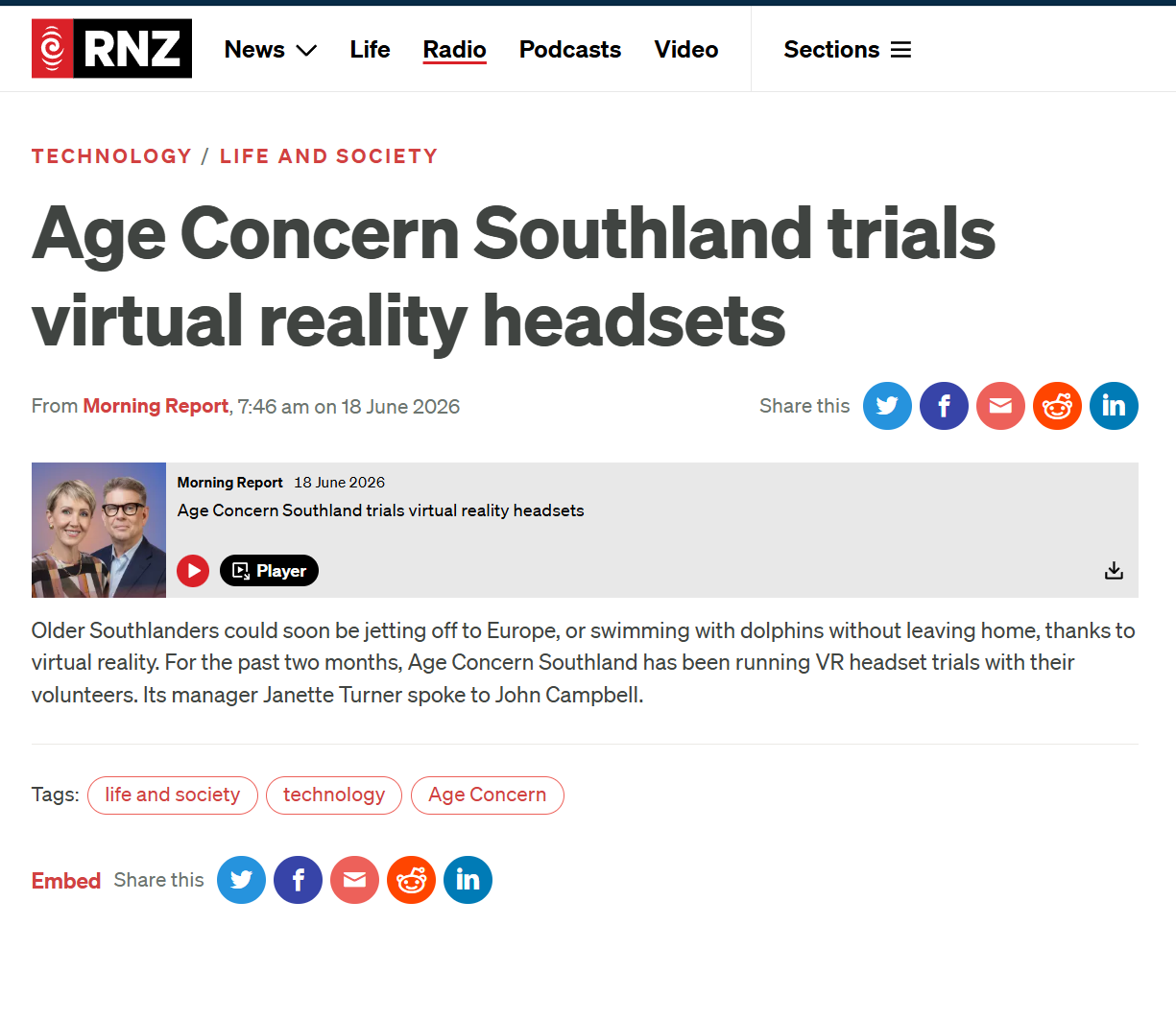
Age Concern Southland trials virtual reality headsets

Older Southlanders could soon be jetting off to Europe, or swimming with dolphins without leaving home, thanks to virtual reality. For the past two months, Age Concern Southland has been running VR headset trials with their volunteers. Its manager Janette Turner spoke to John Campbell.


Read more
READ MORE
25 Jun

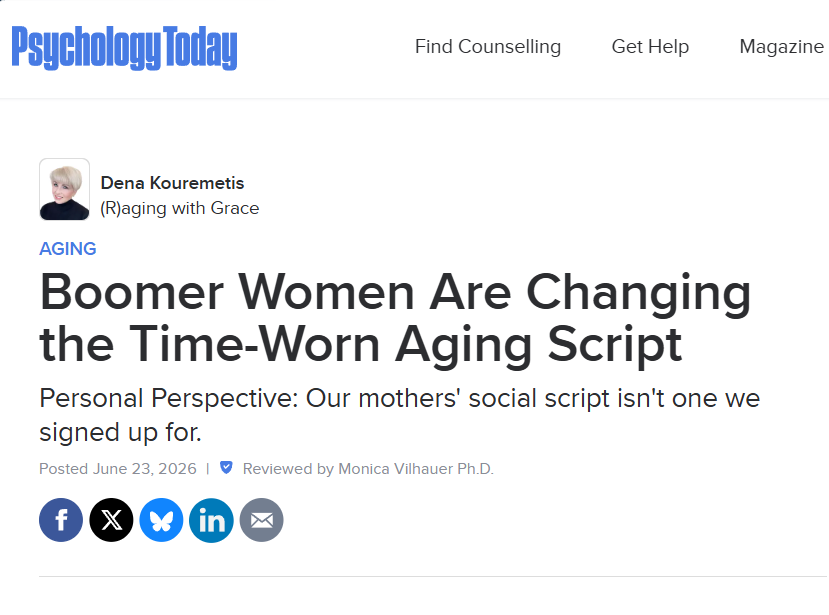
Boomer Women Are Changing the Time-Worn Aging Script

  • Today's woman aged 60-70 refuses to treat the next few decades as a slow fade rather than one of more freedom.
  • The change in us is more a shift than a vibe. Few of us planned any of it. We just never got the memo.
  • Confidence and visibility aren't things we are willing to surrender when we turn 60.


Read more
READ MORE
25 Jun

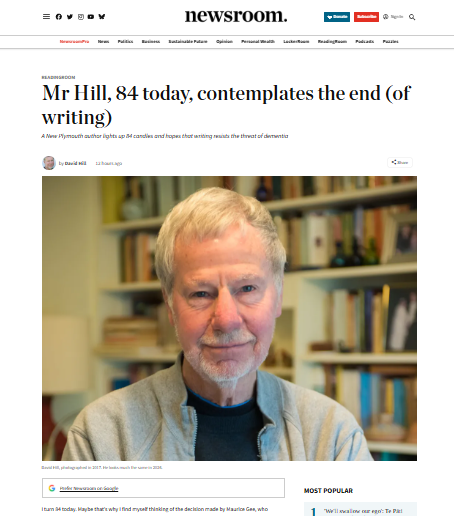
Mr Hill, 84 today, contemplates the end (of writing)

From Newsroom: I turn 84 today. Maybe that’s why I find myself thinking of the decision made by Maurice Gee, who published no adult fiction for his last 16 years. He stopped, as deliberately and absolutely as that.

I also think of Harry Orsman, lexicographer, authority on English as spoken in New Zild, and one of my university tutors at what was then Victoria University of Wellington. Harry was talking to us one afternoon about Chaucer’s language and sources. He mentioned his own tutor, from the late 1940s it would have been. I can’t recall the guy’s name. But I do remember Harry pausing, smiling affectionately, and saying ”There’s not much left of him now, except a pair of bright blue eyes. But he’s still writing.” I knew instantly that I wouldn’t – couldn’t – forget that tribute.

So there you are. One author who stopped; one who couldn’t. Pause here, to contemplate which category each of us may slip into. I know authors who stopped because they couldn’t face another rejection; others whose health or other outside-world circumstances meant they couldn’t keep going. I sympathise with them all.


Read more
READ MORE
25 Jun

Rotorua iwi Ngāti Whakaue launches ‘world-first’ papakāinga aged care model

From the New Zealand Herald: A Rotorua iwi has launched a “world-first” aged care model designed to support kaumātua at home for as long as possible.

Ngāti Whakaue unveiled the papakāinga model of care “designed by iwi, for iwi” at Te Puia in Rotorua on Friday.

About 160 people attended the launch, including Health New Zealand Te Whatu Ora, Iwi Māori Partnership Boards and Ngāti Whakaue representatives.

Ngāti Whakaue has been working with Te Rau Ora – the kaupapa Māori health workforce development organisation for Aotearoa – to address who will care for the iwi’s ageing population, and where.


Read more
READ MORE
17 Jun

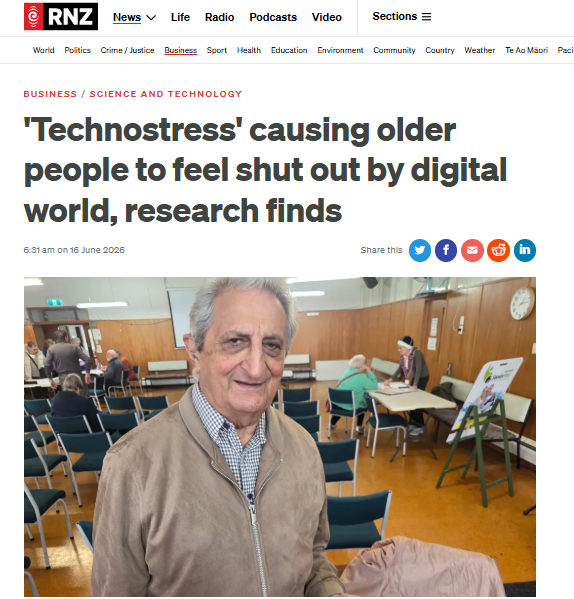
'Technostress' causing older people to feel shut out by digital world, research finds

Endless apps, pop-ups, passwords, updates, downloads, and deepfakes - the relentless march of the digital age is enough to make anyone's head spin.

For some older New Zealanders, it's leading to a loss of social connection and even limiting their access to essential services.

New research out of the University of Auckland has found that "technostress" is causing many older people to feel shut out by the digital world.

But not for 92-year-old Peter Singh and his top-of-the-line iPhone 17.

"I do my emails, I do my banking," he said. "I can find my way in the car."

A keen photographer, he's also got every app you can think of - he's even on TikTok.

He said he knew nothing of computers when he first joined the Eden-Roskill branch of SeniorNet, a non-profit society helping people over 50 to learn or enhance their technology skills.


Read more
READ MORE
16 Jun

A sports professor on five of the biggest myths about exercise and aging

As people around the world seek to live longer, healthier lives, the global longevity and wellness market has topped US$2.5 trillion. Yet research shows that one of the best things we can do to remain fitter and healthier for longer isn’t to drop dollars on expensive longevity treatments or supplements; it’s to exercise.

Research shows that those who exercise regularly are less likely to succumb to premature death, and reduce their risk of developing conditions such as type 2 diabetes, heart disease, osteoporosis and mental health disorders.


Read more
READ MORE
2 Jun

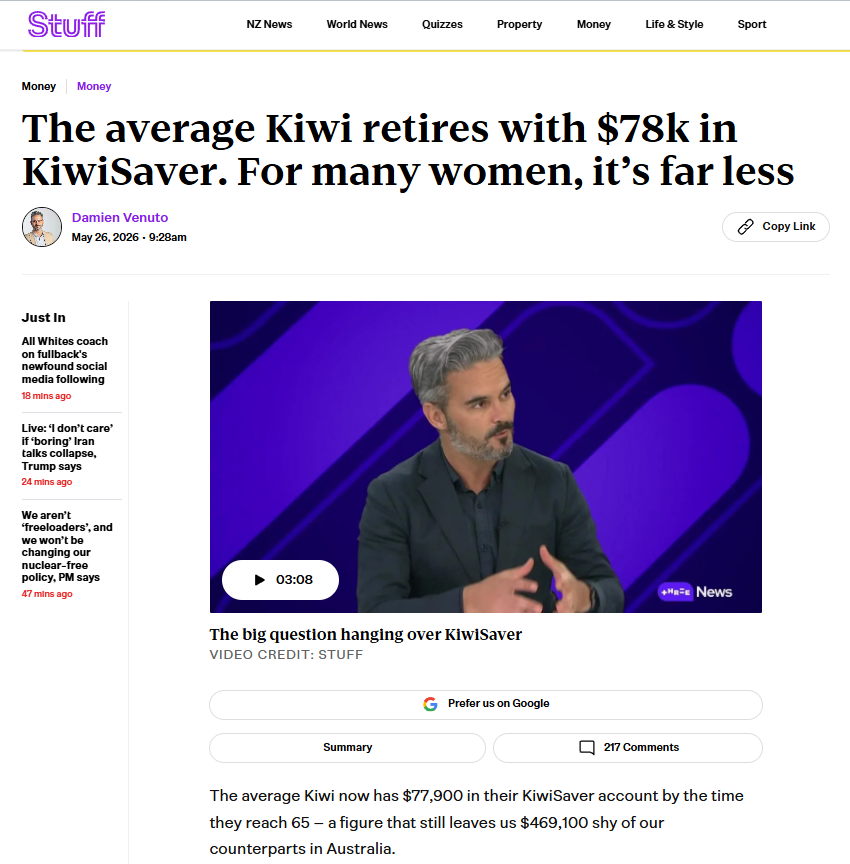
The average Kiwi retires with $78k in KiwiSaver. For many women, it’s far less

The average Kiwi now has $77,900 in their KiwiSaver account by the time they reach 65 – a figure that still leaves us $469,100 shy of our counterparts in Australia.

According to the latest report from the Retirement Commission, our savings by retirement age are up more than $8,000 than they were a year ago.

Balances are growing across every demographic group, with 90% of Kiwis earning $50,000 or more (the annual minimum wage) now contributing to KiwiSaver.

The average KiwiSaver balance across every age group now sits at $41,286, up from $37,079 a year earlier.


Read more
READ MORE
29 May

King's Birthday 2026: What's open, what's closed and how it's decided who gets honours

Explainer - New Zealand celebrates King Charles' birthday with a public holiday Monday - even though his birthday isn't until November.

Here's what you need to know about what will be open and closed, your employment rights if you are working and why we celebrate the monarch every June, regardless of when their birthday is.

So is the King giving me a day off work?


Pretty much.


Read more
READ MORE
28 May

SuperGold card being upgraded

New Zealand’s seniors will soon be able to use their SuperGold cards as an official form of identification, making it easier for them to access essential services. “Budget 2026 is funding the modernisation of the SuperGold Card to give users the free option to upgrade to a version which they can use as an accepted form of primary identification,” Seniors Minister Casey Costello announced today. “More than 900,000 New Zealanders are aged 65 and over and many do not have legal ID such as a driver licence or passport, which can limit their ability to access things like banking and legal services.” The upgraded card will include a photograph and enhanced security features, and meet standards required by banks and other service providers. It will be available in both physical and digital versions.


Read more
READ MORE
25 May

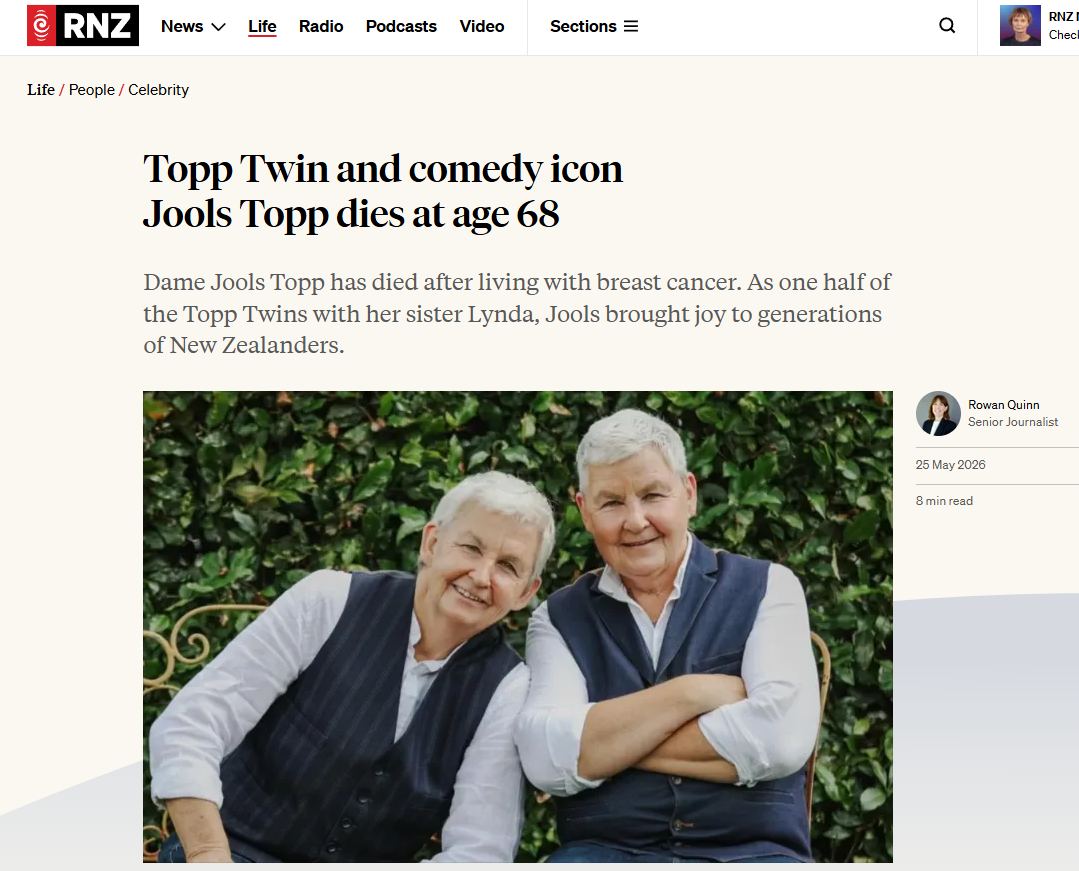
Topp Twin and comedy icon Jools Topp dies at age 68

Dame Jools Topp has died after living with breast cancer. As one half of the Topp Twins with her sister Lynda, Jools brought joy to generations of New Zealanders. 

One of the country's most loved entertainers, Dame Jools Topp, has died at the age of 68.

She had breast cancer, a disease that she was first diagnosed with in 2006 before it returned in 2021.

Jools died at home on Saturday with her twin sister Lynda, brother Bruce, close friends and "all her fur-babies by her side", a statement from the family confirmed on Monday. A celebration honouring Jools’ life will be announced shortly.


Read more
READ MORE
25 May

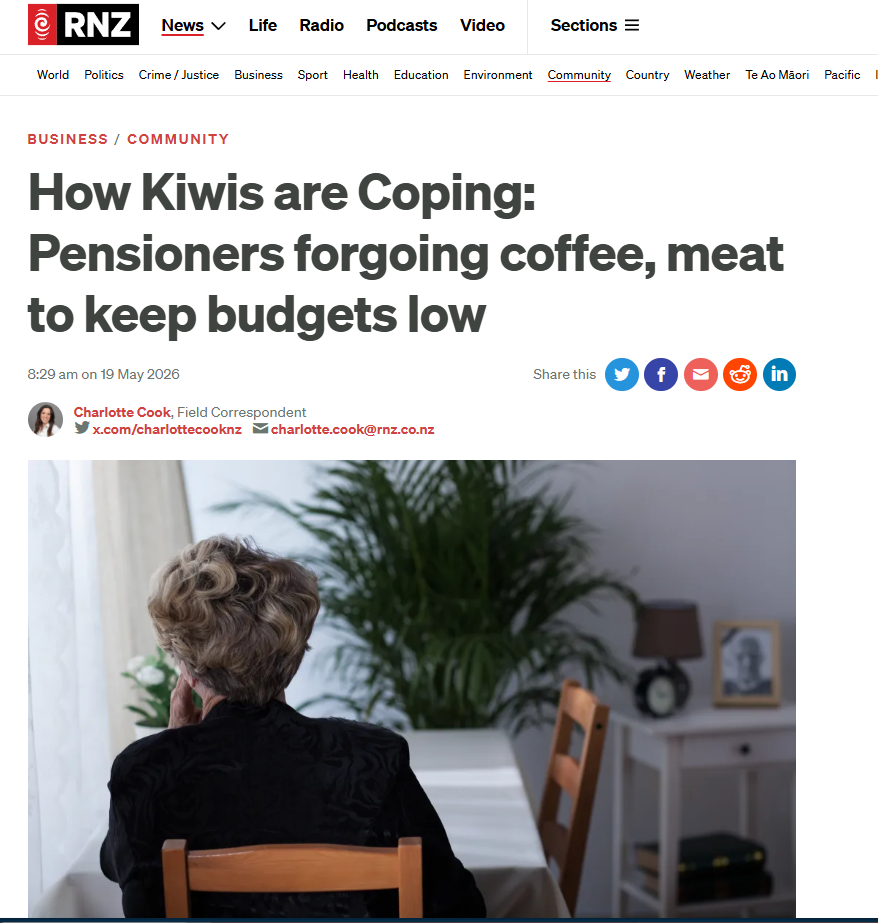
How Kiwis are Coping: Pensioners forgoing coffee, meat to keep budgets low

As the cost of living climbs and Trump's war on Iran drives fuel costs sky-high, how are Kiwis coping? What are they doing without? How are they saving money? An RNZ series examines the ways it's impacting different groups.

The increasing cost of living is hurting most, but those on fixed incomes have even less room to move with some forced to forego coffee and meat.

Petrol and oil prices have crept exponentially higher after the war in Iran, while statistics show pharmaceuticals and electricity also keep putting pressure on the wallet.

Pensioners were just one group on fixed incomes struggling to make ends meet.

As a single pensioner living alone - you'd get $555.15 a week.

It's slightly less if that person was living in shared accommodation.

Whereas a couple who were both eligible get $427.04 each a week.

So when bills, insurance, petrol and other expenses add up, something has got to give.


Read more
READ MORE
12 May

Concern raising super age would widen inequality

An Auckland University researcher says raising the superannuation age will increase inequality, especially for Maori and Pasifika. The Director of Auckland University's Centre for Co-Created Ageing Research, Professor Ngaire Kerse, who also works as a GP spoke to John Campbell.


Read more
READ MORE
11 May

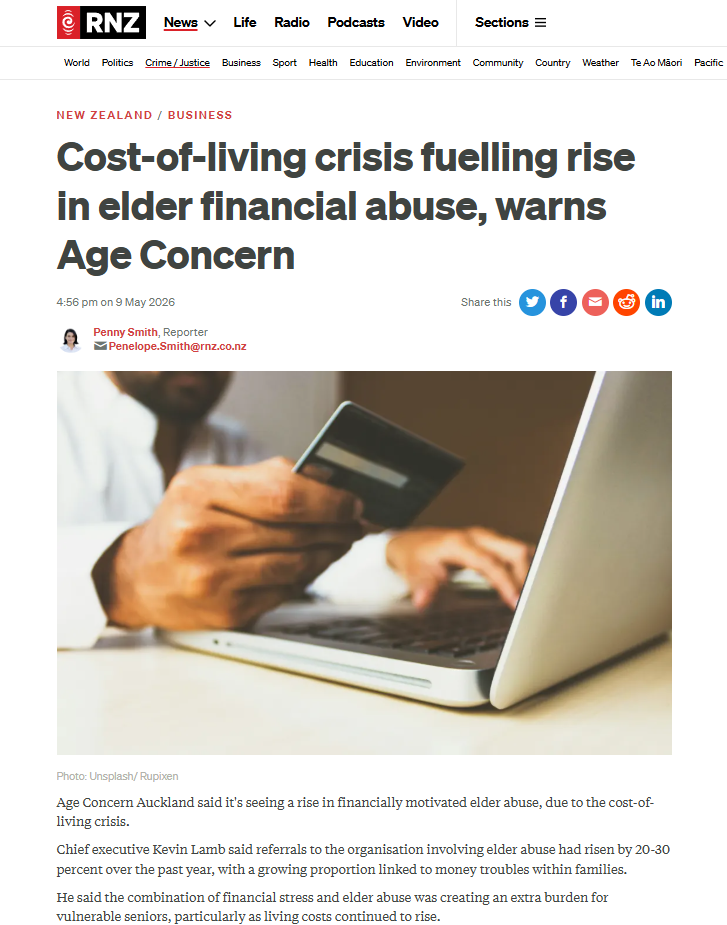
Cost-of-living crisis fuelling rise in elder financial abuse, warns Age Concern

Age Concern Auckland said it's seeing a rise in financially motivated elder abuse, due to the cost-of-living crisis.

Chief executive Kevin Lamb said referrals to the organisation involving elder abuse had risen by 20-30 percent over the past year, with a growing proportion linked to money troubles within families.

He said the combination of financial stress and elder abuse was creating an extra burden for vulnerable seniors, particularly as living costs continued to rise.

''We are hearing from older people who are literally panicking... 'Do I turn the heating on, or do I go and buy myself proper decent food for today?'

"Older people are facing a double whammy. They're really seeing this struggle in terms of financial hardship on themselves, but also being more vulnerable to those who would take advantage of them."

Lamb said the problem was driven by financial hardship, with some families struggling to make ends meet and older relatives becoming a source of financial support.


Read more
READ MORE
8 May

'I will not see how planet's story ends' – Sir David Attenborough turns 100

Sir David Attenborough celebrates his 100th birthday today, with events in New Zealand and in many other countries marking the achievements of the world's most famous naturalist.

Sir David has shown hundreds of millions of people some of the world's rarest creatures and inspired generations through his unique broadcasts about planet Earth.

“I will not see how that story ends but, after a lifetime of exploring our planet, I remain convinced that the more people enjoy and understand the natural world, the greater our hope of saving both it and ourselves becomes," he wrote around the release of his 2025 film Ocean with David Attenborough.


Sir David has released more than 100 documentaries, according to Penguin Books Australia, and continues to produce television series.

Schools, universities, zoos, museums, environment groups, the BBC – where he began his broadcasting career – libraries and New Zealand's Department of Conservation are among the organisations paying tribute to the legendary broadcaster.


Read more
READ MORE
7 May

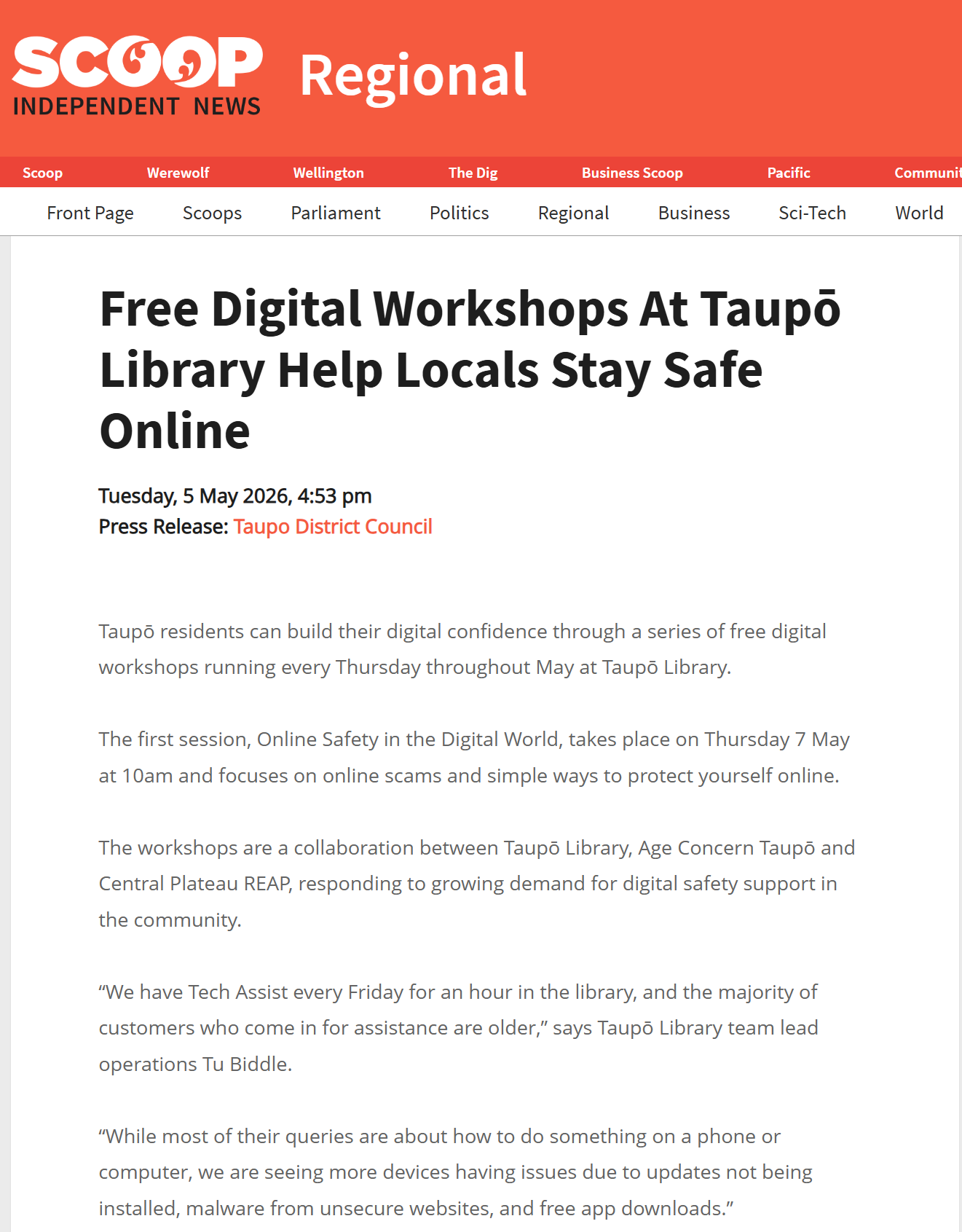
Free Digital Workshops At Taupō Library Help Locals Stay Safe Online

To view Age concern Aucklands digital workshops check out our whats available on our website.

Taupō residents can build their digital confidence through a series of free digital workshops running every Thursday throughout May at Taupō Library.

The first session, Online Safety in the Digital World, takes place on Thursday 7 May at 10am and focuses on online scams and simple ways to protect yourself online.

The workshops are a collaboration between Taupō Library, Age Concern Taupō and Central Plateau REAP, responding to growing demand for digital safety support in the community.

“We have Tech Assist every Friday for an hour in the library, and the majority of customers who come in for assistance are older,” says Taupō Library team lead operations Tu Biddle.

“While most of their queries are about how to do something on a phone or computer, we are seeing more devices having issues due to updates not being installed, malware from unsecure websites, and free app downloads.”


Read more
READ MORE
4 May

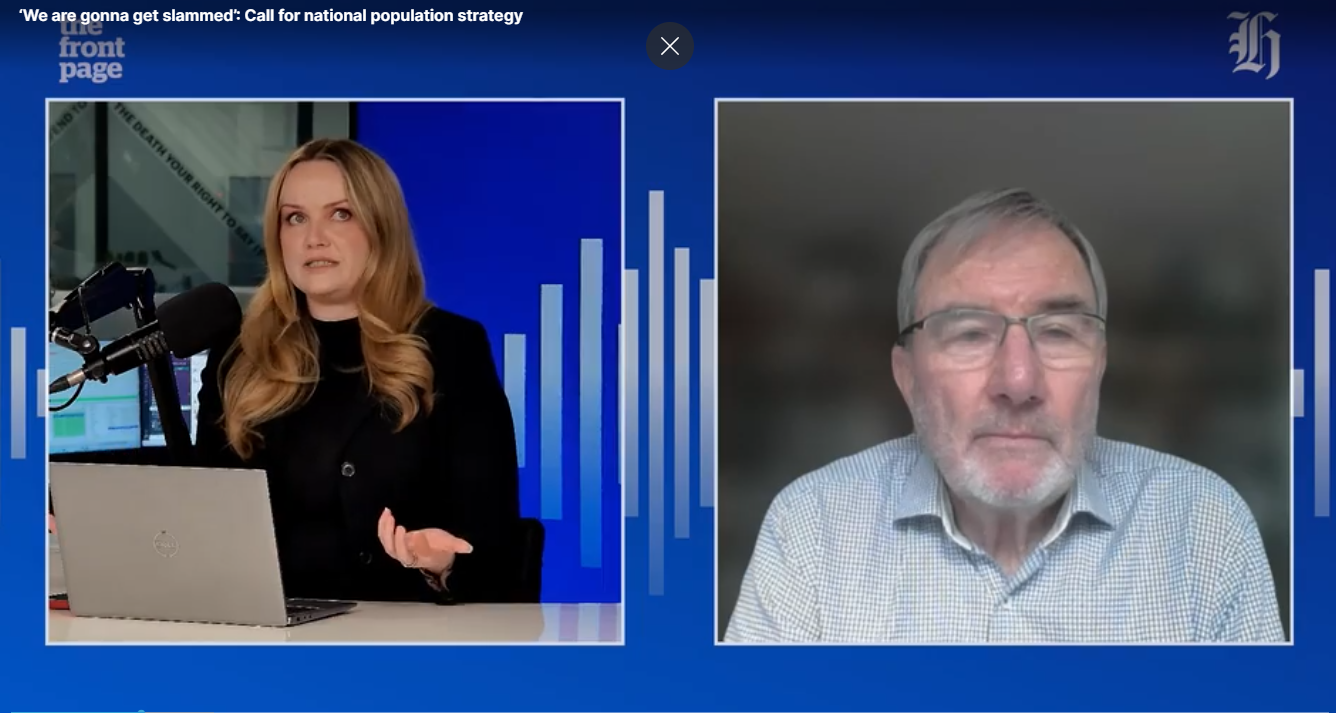
Report warns on ageing population, shrinking workforce, regional risk – The Front Page

The Front Page podcast host:

NZ HeraldAcademics are urging politicians to stop treating demography as background noise and start treating it as core national planning requiring cross-party collaboration.

A new report suggests New Zealand’s rapidly changing demographic make-up has reached a critical point.

Within decades, a quarter of all New Zealanders could be 65 or older – a situation unheard of in our history.

In the 1960s, there were seven people aged 15-64 (those who pay the most tax) for every person over-65. In 2025, it was four to one, and in 2065, it is forecast to be two to one.

At the same time, migration patterns are shifting, cities like Auckland are absorbing most growth, and regional decline is accelerating.

The Koi Tū Centre for Informed Futures report argues these trends can no longer be managed as separate issues – we need a national population strategy to link housing, health, infrastructure, and economic policy.

Sir Peter Gluckman and emeritus professor Paul Spoonley co-authored the new report titled People, Place and Prosperity: The Case for a Population Strategy.

“New Zealand now faces a pivotal decision regarding our demographic trajectory,” the report, released today by the Koi Tū Centre for Informed Futures, said.


Read more
READ MORE
23 Apr

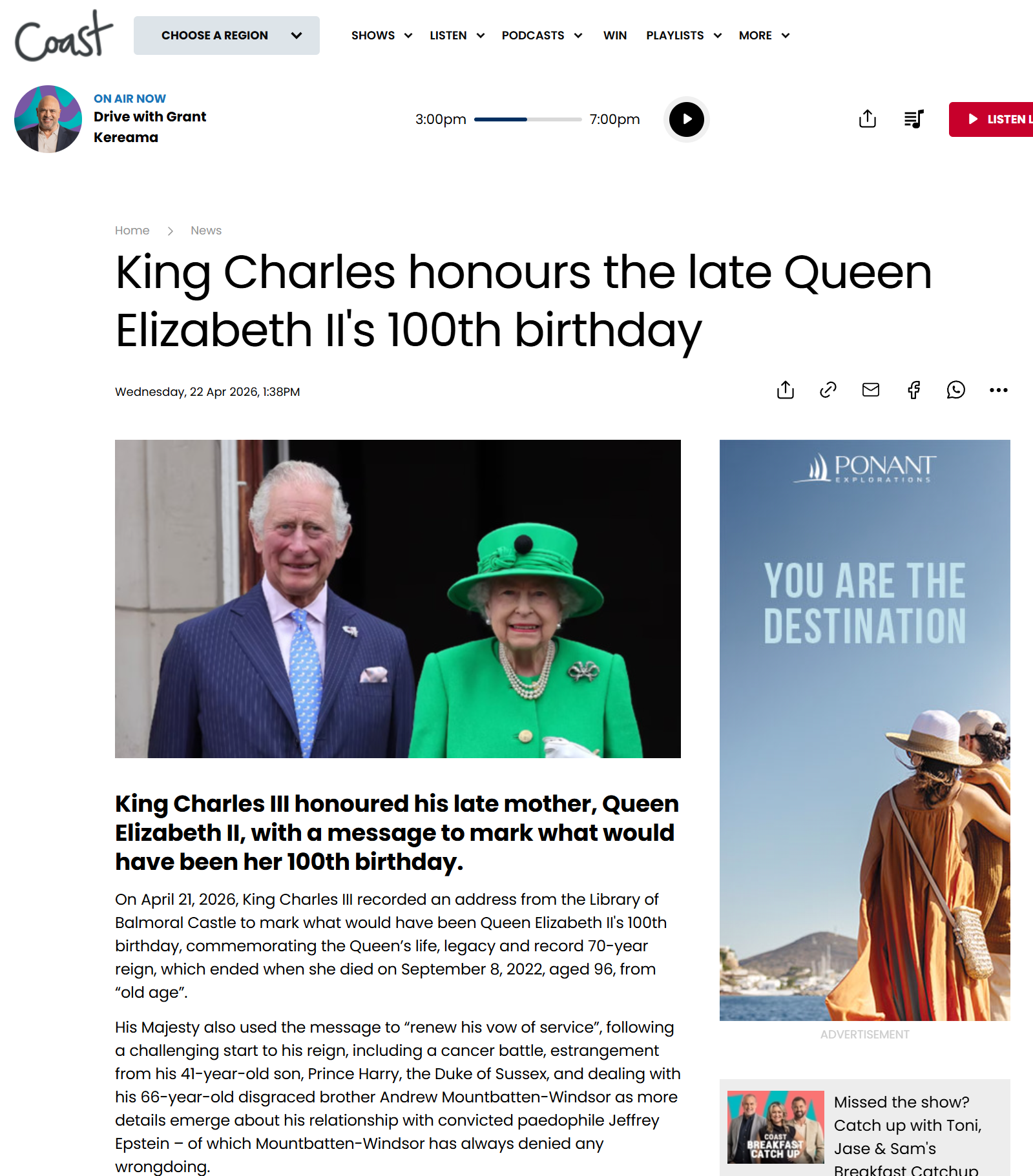
King Charles honours the late Queen Elizabeth II's 100th birthday

On April 21, 2026, King Charles III recorded an address from the Library of Balmoral Castle to mark what would have been Queen Elizabeth II's 100th birthday, commemorating the Queen’s life, legacy and record 70-year reign, which ended when she died on September 8, 2022, aged 96, from “old age”.

His Majesty also used the message to “renew his vow of service”, following a challenging start to his reign, including a cancer battle, estrangement from his 41-year-old son, Prince Harry, the Duke of Sussex, and dealing with his 66-year-old disgraced brother Andrew Mountbatten-Windsor as more details emerge about his relationship with convicted paedophile Jeffrey Epstein – of which Mountbatten-Windsor has always denied any wrongdoing.

A royal insider told the Mirror: “The start to the King’s reign has not been without its obvious troubles, but there has been much to celebrate as well.

“He has been immensely positive in the face of adversity, continuing his cancer treatment while maintaining an incredible work rate.


Read more

Our Collaborators

Organisations we work with

Davis Funnerals logoWhau local boardDementia Auckland logoUniversity of AucklandKristin School logoMacular Degeneration New ZealandACC Stronger for LongerGlaucoma NZ logoTe Uru Tangata  - Workplace inclusion Kahui Tu Kaha

Charity Name: Age Concern Auckland Trust
Registration Number: CC60750

What we do - Services
    Say hello

    09-820-0184

    ageconcern@ageconak.org.nz

    57 Rosebank Road, Avondale, Auckland 1026

    Monday-Friday 9am-4pm


    All Rights Reserved. © 2026 Age Concern Auckland